
Door Refinishing in Virginia-Highland, Atlanta
Historic-safe refinishing for Craftsman bungalow, cottage, and Foursquare doors — restoring original heart-pine and fir without stripping away the character that makes your street look the way it does.
No obligation. Upload a photo, hear back fast.

Senior Wood Refinishing Specialist · Virginia-Highland & Intown Atlanta
⏱ 9 min read · Published September 2026
Virginia-Highland is one of Atlanta’s most architecturally intact intown neighborhoods, and its front doors show it. Original heart-pine and fir entry doors, leaded and beveled sidelights, and hand-carved panel details are common on the Craftsman bungalows and English cottages that line streets near North Highland Avenue’s retail corridor, along the curving blocks around Virginia and Monroe, and through the quieter pockets bordering Freedom Parkway and the Atlanta BeltLine. Door refinishing is almost always the right call here — not replacement — because these doors were built from old-growth lumber that simply isn’t available new anymore.
DoorStain brings the same meticulous, multi-step refinishing process we use across Metro Atlanta to Virginia-Highland’s historic housing stock, adapted specifically for the neighborhood’s age, materials, and — where it applies — its conservation-district review requirements. Below is a complete look at what makes Virginia-Highland’s doors unique, what our process involves, and how to get a free quote with photos.
A Streetcar Suburb Built to Last
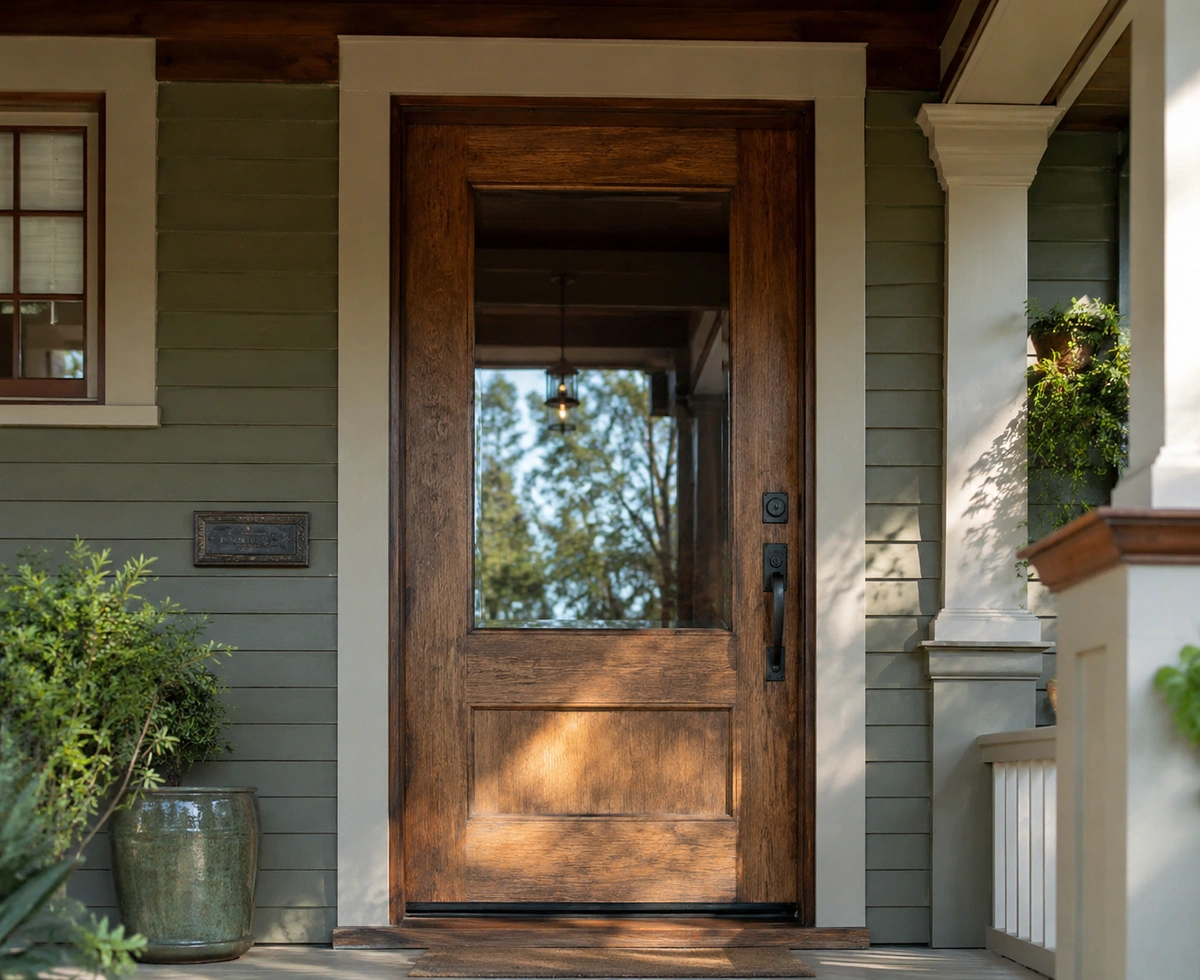
Virginia-Highland’s historic district developed largely between 1909 and 1926, during the neighborhood’s growth as a streetcar suburb roughly three miles northeast of downtown Atlanta, named for the intersection of Virginia Avenue and North Highland Avenue at its retail heart. That concentrated building period is why the neighborhood has something increasingly rare in Metro Atlanta: architectural coherence. Block after block, homes share a family resemblance in scale, materials, and detailing, and the district’s National Register of Historic Places documentation identifies Craftsman, English Vernacular Revival, and Colonial Revival as the dominant architectural styles, with bungalow, English cottage, and American Foursquare as the most common house types. The neighborhood’s signature curving streets — most visibly at the intersections along Virginia Avenue — are a physical remnant of the original trolley line, which required gentler curves than a standard street grid.
Craftsman Bungalows, English Cottages, and American Foursquares
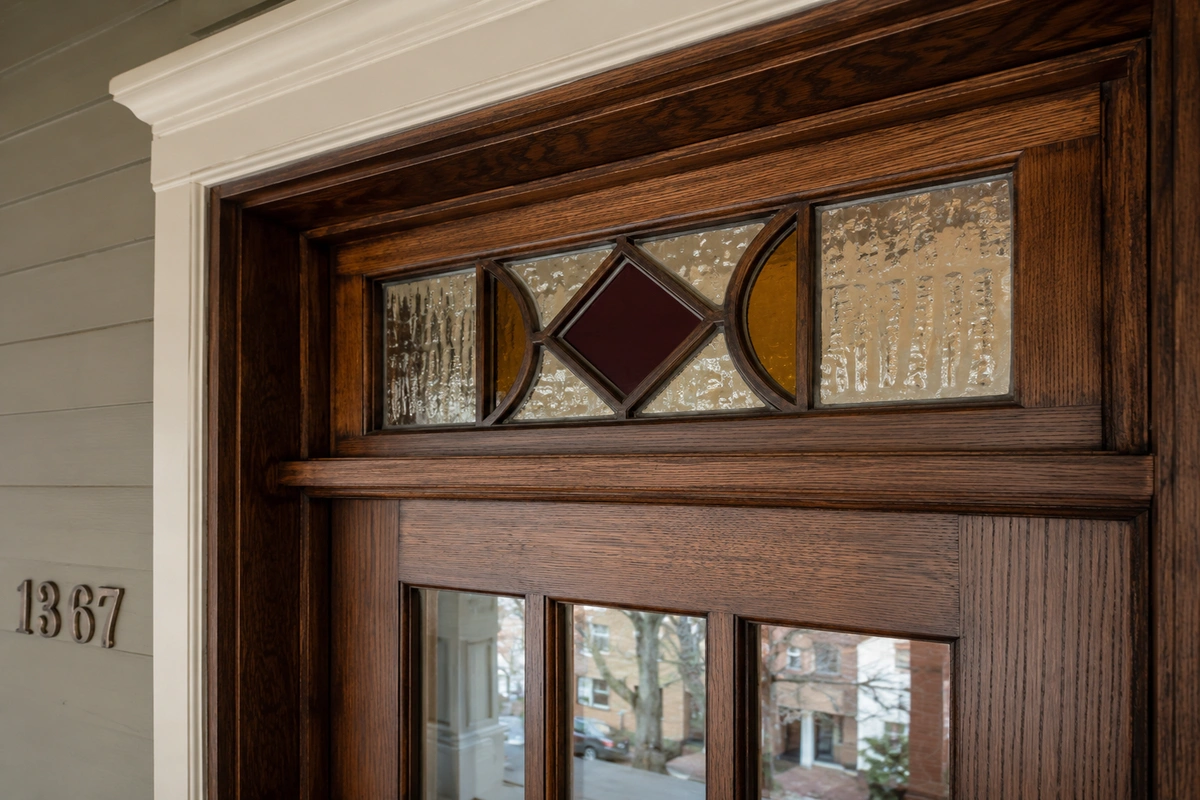
Each of these house types carries a distinct front-door profile, and our refinishing approach adjusts accordingly. Craftsman bungalow doors typically feature wide stiles, exposed joinery details, and often a single large glass panel or a grid of small panes — refinishing has to preserve the visual weight of that woodwork rather than sand it smooth and generic. English cottage doors tend to be narrower, sometimes arched, with heavier hardware and thicker panel profiles that show decades of hand-applied finish layers. American Foursquare doors are usually the most substantial of the three, with wide center stiles and, frequently, transom windows above that need to be color-matched alongside the door itself. A handful of mid-century ranch homes near the Morningside border round out the mix, along with newer construction and additions built to reference the surrounding streetscape.
The Urban Design Commission Conservation District
Part of Virginia-Highland sits inside a conservation area regulated by the City of Atlanta’s Urban Design Commission (UDC) — a local regulatory overlay that is separate from, and stricter in some respects than, the neighborhood’s National Register historic listing. National Register status alone, worth noting, doesn’t legally prevent exterior alteration or demolition — only a local historic or conservation district designation does that. Properties inside the UDC-designated conservation area are subject to exterior review before certain visible modifications proceed.
This isn’t identical to the private-subdivision HOA architectural review boards we work with elsewhere in Metro Atlanta — that comparison holds broadly across our service area, but it isn’t the accurate description for Virginia-Highland specifically. It’s a municipal review process tied to a property’s location inside the district boundary, not a homeowners association decision. What this means in practice: if your door sits inside the conservation area, a color or finish change that visibly alters the exterior may need to clear that review before work begins. We’re not a substitute for that process, and we don’t represent that we obtain UDC approvals on a homeowner’s behalf — but we do flag it up front during your quote so there are no surprises, and we can work from a color or finish plan you’ve already had approved. Homeowners just outside the mapped conservation boundary, or refinishing a door that isn’t visibly altering the exterior (a natural-wood restain matching the existing tone, for instance), typically don’t trigger review at all.
How Atlanta’s Climate Tests Virginia-Highland’s Historic Doors
Georgia’s humid subtropical climate is hard on any exterior wood door, but it’s especially unforgiving on doors that are already 80 to 100 years old. Summer humidity swings cause old-growth wood to expand and contract in ways that stress original joinery, while intense UV exposure — particularly on west- and south-facing entries common along the neighborhood’s curvilinear streets — breaks down finish layers faster than most homeowners expect. Winter’s occasional freeze-thaw cycles add a second stress point, especially where moisture has already worked into end grain near the threshold. The neighborhood’s mature tree canopy, one of its defining features, adds a wrinkle of its own: heavy shade slows drying after rain, and dense spring pollen can settle into hairline cracks in an aging finish, trapping moisture against the wood.
| Season | Primary threat | Typical damage pattern on historic doors | What we address in the refinishing process |
|---|---|---|---|
| Late spring–summer | UV exposure + heat | Finish chalking, fading, uneven tone on sun-facing panels | UV-resistant topcoat layers, even-tone re-staining |
| Summer–early fall | High humidity + tree canopy shade | Wood swelling, sticking at the jamb, slow-drying finish trapping moisture | Proper moisture-cure timing between coats, hardware and strike-plate adjustment |
| Winter | Freeze-thaw cycling | Hairline cracking at panel joints, finish lifting near the threshold | Flexible marine-grade sealants that move with the wood instead of cracking |
| Year-round | Age of original material | Old-growth grain that’s harder and denser than modern lumber, requiring different sanding pressure | Hand-sanding passes calibrated to old-growth density, not power-tool defaults |
Our Door Refinishing Process for Character Homes
Every Virginia-Highland project starts with an on-site evaluation of the door’s wood species, joinery condition, and existing finish layers — historic doors often carry three or four generations of paint or varnish, and knowing what’s underneath changes the approach. From there, our multi-step process includes deep sanding calibrated to the wood’s age and density, careful surface preparation that protects original glazing and hardware, layered staining to restore natural depth and grain definition, and a protective topcoat built for Georgia’s climate swings.
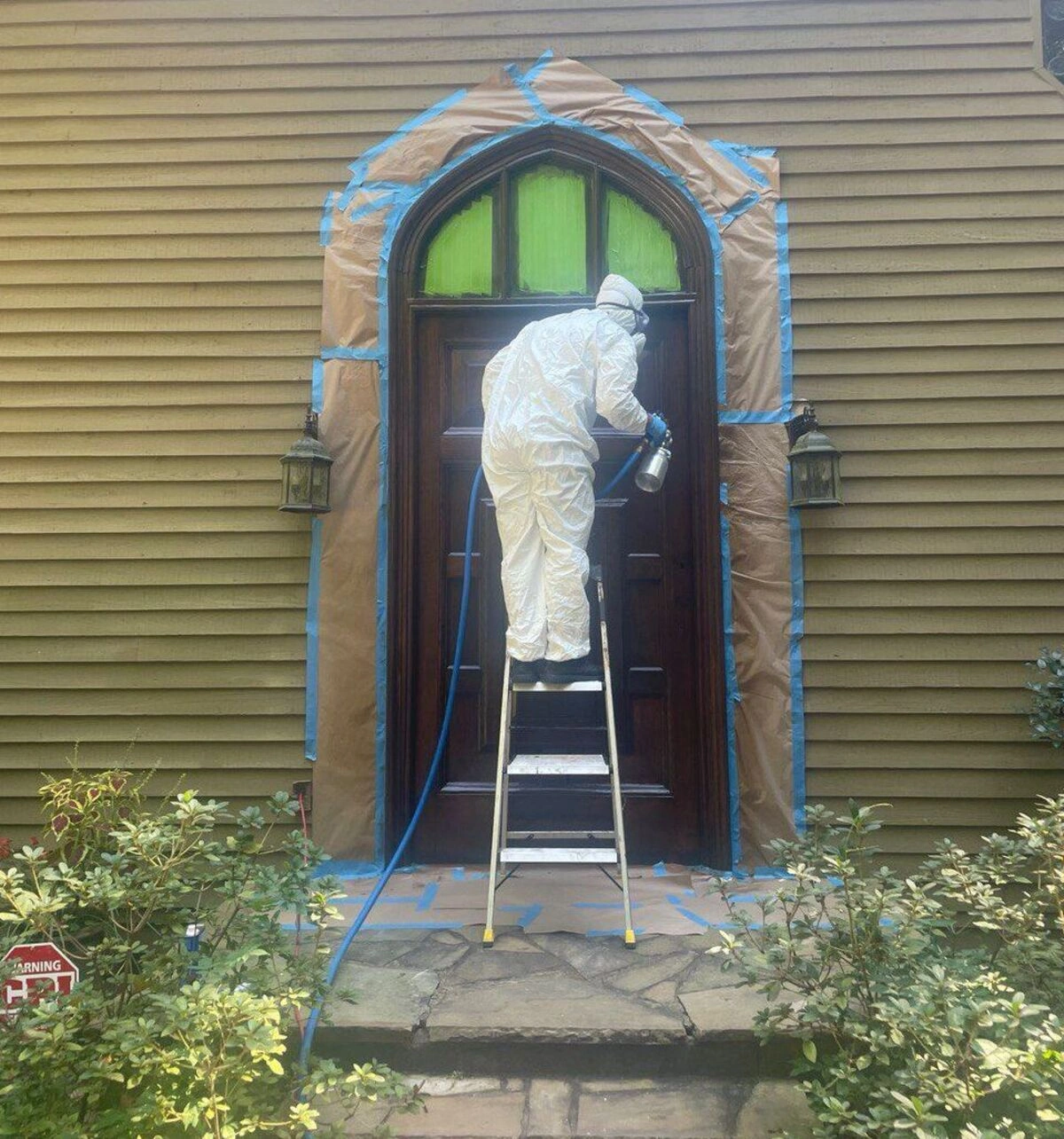
We refinish doors in place whenever the door’s condition allows it, which matters a great deal on a 100-year-old original door — removing and transporting it introduces risk of damage that simply isn’t worth it when on-site work achieves the same result. Most standard projects complete in one to two days; if a property is inside the UDC conservation area and a visible color change is planned, homeowners should budget additional time upfront for that review before work begins, since it happens on the City’s timeline, not ours. Our portfolio includes examples of this approach on comparable historic homes elsewhere in the metro.
Materials & Methods for Old-Growth Heart Pine and Fir
Many Virginia-Highland doors were built from old-growth heart pine or fir — dense, tight-grained lumber that behaves differently under a sander and takes stain differently than the faster-growth wood used in modern replacement doors. We adjust sanding pressure and grit progression to avoid burnishing the surface of old-growth stock, which can cause stain to sit unevenly if rushed. Where original glass, leaded panes, or decorative hardware are present, we mask and protect them rather than removing them, preserving details that can’t be replicated with off-the-shelf parts. The final protective layer uses a marine-grade formulation designed to flex with humidity-driven wood movement instead of cracking at the panel joints — the failure point we see most often on historic doors that were refinished with a standard interior-grade product.
Door Refinishing vs. Replacement for Historic Doors
For a Virginia-Highland home, refinishing is almost always the stronger option over replacement, for reasons that go beyond cost. A replacement door — even a high-quality one — is built from modern lumber that doesn’t match the density, grain, or aging characteristics of a century-old original, and a mismatched door can visibly stand out on a streetscape where architectural coherence is part of the neighborhood’s identity (and, inside the conservation area, part of what UDC review is specifically evaluating). Refinishing preserves the original material, the original proportions, and — where present — original glass and hardware that would be expensive or impossible to source new. It’s also typically faster: most refinishing projects complete in one to two days, compared to the lead time on a custom replacement door built to match a historic opening.
Neighborhood Coverage Across Virginia-Highland
We serve the full footprint of Virginia-Highland, from the bungalow-lined blocks near the North Highland Avenue retail corridor to the quieter streets bordering Morningside to the north and Poncey-Highland and Freedom Parkway to the west. Whether your door faces one of the neighborhood’s original subdivisions — areas historically known as Highland View, Vineyard Park, or North Boulevard Park — sits along one of the district’s curvilinear side streets shaped by the old trolley line, or is part of one of the neighborhood’s historic apartment buildings, our process adapts to the door’s age and exposure rather than applying a one-size approach.
We also regularly work in the immediately surrounding historic neighborhoods. Door Refinishing Decatur and Door Refinishing Druid Hills cover homes with a similar early-20th-century profile just to the east, and Door Refinishing Brookhaven covers the corridor to the north. For the full list of communities we serve across the metro, see our Areas We Serve page.
Service & Investment Overview
Pricing below is presented as a relative tier structure. Exact dollar figures are pending final client sign-off and will be added once confirmed — do not quote these ranges as final pricing.
| Service tier | Typical scope | Best for | Relative investment |
|---|---|---|---|
| Standard refinish | Single door, sand, stain, seal | Doors with surface fading, no structural issues | $ (pending confirmation) |
| Historic restoration | Door + sidelights/transom, hardware preservation, glass masking | Original Craftsman, cottage, or Foursquare doors | $$ (pending confirmation) |
| Full entryway restoration | Door, frame, sidelights, transom, hardware refinishing | Conservation-district homes needing a documented, cohesive result | $$$ (pending confirmation) |
Pricing & Warranty at a Glance
Every refinishing quote is based on the same core factors: the door’s size and material, how many finish layers need to be stripped back, whether sidelights or a transom are included, and whether the property falls inside the UDC conservation area (which can add a review step, though not a cost itself). Because those variables shift project to project, we don’t publish a flat rate — the tiered structure above reflects relative scope, and your quote will include an itemized number once we’ve seen photos or completed an on-site evaluation.
Warranty coverage on refinishing work is still being finalized on our end and isn’t published yet. If warranty terms matter to your decision, ask us directly when you request your quote and we’ll give you the current answer.
How DoorStain Compares to Other Atlanta Door Refinishers
See the Competitor Gap Analysis table above for the full comparison against Reformation Doors and the suburban competitor set. The short version: no other refinisher currently serving Virginia-Highland addresses the UDC conservation-district question directly, and none offers an on-site photo quote form.
Caring for Your Refinished Door in Atlanta’s Humidity
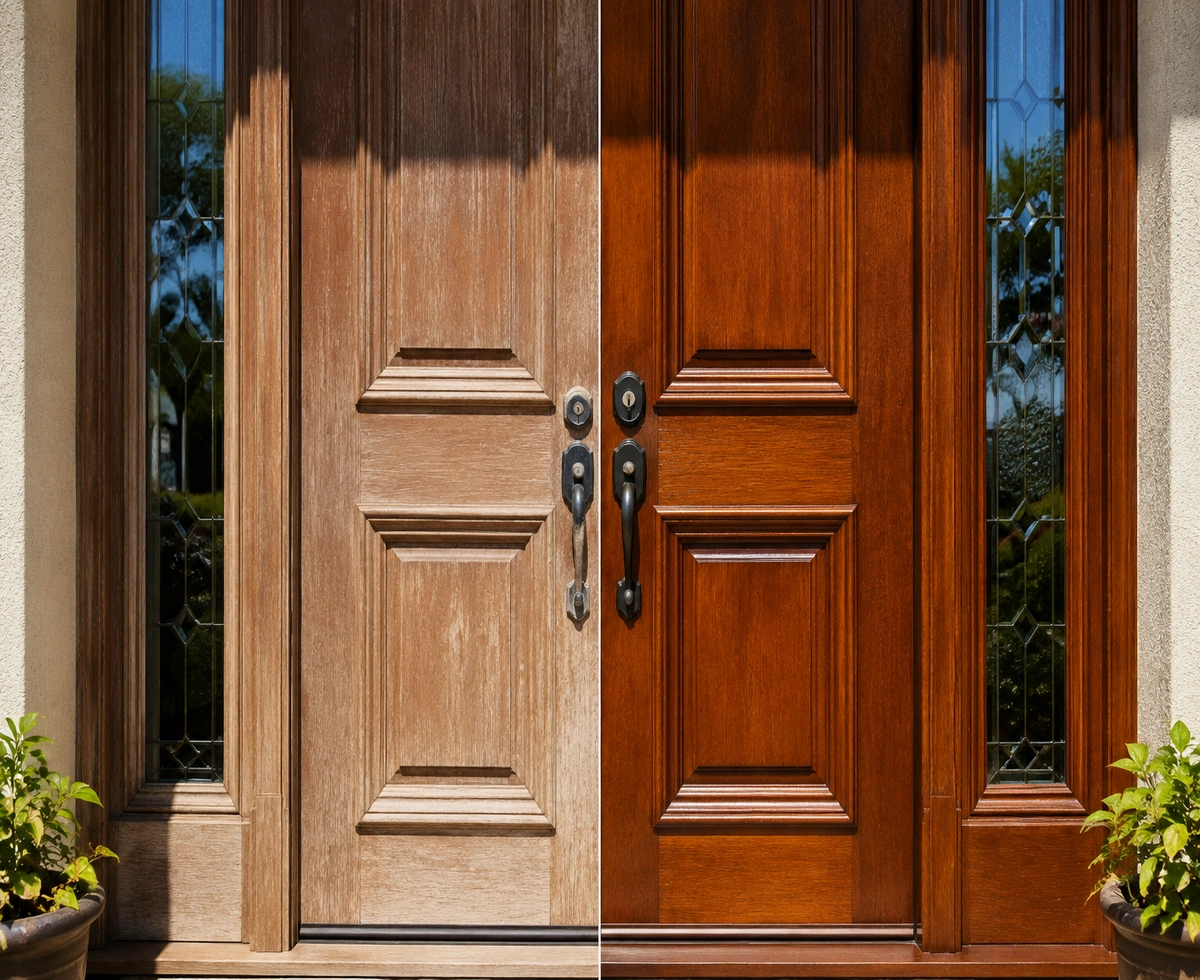
A properly refinished historic door can look this way for years, but Georgia’s climate rewards a little seasonal attention. Wipe down the door’s surface periodically to remove pollen and grime buildup common in Virginia-Highland’s tree-canopied streets, since trapped debris can hold moisture against the finish. Check weatherstripping and the threshold seal each spring, since that’s where humidity-driven swelling shows up first. Avoid pressure-washing anywhere near a refinished wood door — it can force water past the topcoat and into original joinery, and it’s especially risky on doors with original leaded or beveled glass. If you notice the finish starting to dull on a sun-facing door, a maintenance re-coat well before the wood itself is exposed is far less invasive, and far less costly, than a full refinish.
Door Refinishing Smyrna and Vinings
What Virginia-Highland Homeowners Are Saying
The reviews below are verified Google reviews for DoorStain (4.9★ average, 235+ reviews). We don’t yet have Virginia-Highland-specific reviews on file — if you can share any from past Virginia-Highland clients, we’ll swap them in here.
“A big thank you to Doorstain for the superb wood refinishing job! My floors look stunning, and the team was courteous and professional. Definitely recommending them to others!” — Nanfuka Brenda
“Door Stain Refinishing is the best! They have refinished my doors multiple times, their product is the best and it really does last a long time, even in direct sunlight! … after working with them for 5 years, I can say I am super happy with the results I’ve seen every time.” — Micrer 3D
“I had a fantastic experience with Door Stain – Door & Restoration in Atlanta. They transformed my wooden doors beautifully with their expert staining and finishing. The team’s professionalism and attention to detail were outstanding.” — Hossein Sharifi Nasab
Get Your Free Virginia-Highland Door Refinishing Quote
Upload a few photos of your door and tell us about your project below. Contact us directly if you’d rather talk it through first, or call (770) 999-9982.
Frequently Asked Questions
Does my Virginia-Highland home need Urban Design Commission approval before refinishing my door?
It depends on whether your property sits inside the mapped conservation area and whether the work visibly changes the exterior. A natural-tone restain that matches the door’s existing appearance typically doesn’t trigger review; a color change on a door visible from the street may. We flag this during your quote, but the approval process itself is between the homeowner and the UDC.
How do I find out if my address is inside the mapped conservation district boundary?
The boundary doesn’t follow the informal neighborhood name — it’s a specific mapped area defined by the City of Atlanta. We recommend checking with the City’s Urban Design Commission or your closing paperwork/deed if you’re unsure; we’re happy to note the question on your quote request and point you toward the right resource.
My door has multiple layers of old paint or varnish from previous owners — can it still be refinished?
In most cases, yes. Century-old doors in Virginia-Highland often carry three or four generations of finish. Our process is built around identifying what’s underneath before we start, and stripping back to sound wood without damaging the original grain, rather than sanding blind.
Does refinishing affect my home’s National Register Historic District listing?
No. National Register listing is honorary and doesn’t itself regulate exterior changes — that’s a separate, local-level protection (like the UDC conservation area) that some, but not all, of Virginia-Highland falls under. Refinishing an existing door in its original color and profile doesn’t put either designation at risk either way.
What’s different about refinishing a Virginia-Highland Craftsman bungalow door versus a standard door?
Craftsman doors typically have wider stiles and more exposed joinery detail than a builder-grade modern door, which changes how we approach sanding and staining to preserve the woodwork’s visual weight rather than smoothing it out.
Do you preserve original leaded glass sidelights and transoms common on Virginia-Highland Foursquares?
Yes. We mask and protect original glazing and hardware rather than removing it, since these details are often original to the home and can’t be replicated with modern replacement parts.
How does Atlanta’s humidity affect a 100-year-old original door differently than a newer one?
Old-growth heart pine and fir move differently than modern lumber as humidity shifts. Our topcoat is a flexible, marine-grade formulation designed to move with that expansion rather than cracking at the panel joints, which is the most common failure point on older doors refinished with standard interior-grade products.
Do you offer a warranty on Virginia-Highland refinishing work?
Warranty terms are being finalized and will be published here once confirmed — please ask our team directly for current coverage details when you request your quote.