
Door Refinishing in West End, Atlanta, GA
Professional door refinishing in West End typically runs $375–$950 per door, slightly above the metro average because so many of the neighborhood’s doors are original to a locally designated historic district and require period-accurate color and material matching. Most single-door projects are completed on-site in 1 to 2 days.
Refinishing an existing door in its original style and color is generally treated as routine maintenance and doesn’t require Atlanta Urban Design Commission (AUDC) approval — but replacing a door outright, or changing its color or material, typically does. We’ll flag that distinction during your quote if it applies to your property.
No obligation. Fast, professional response.

Senior Wood Refinishing Specialists · West End & the Atlanta University Center Corridor
⏱ 12 min read · Updated September 2026
professional door refinishing in West End typically runs $375–$950 per door, slightly above the metro average because so many of the neighborhood’s doors are original to a locally designated historic district and require period-accurate color and material matching. Most single-door projects are completed on-site in 1 to 2 days. Refinishing an existing door in its original style and color is generally treated as routine maintenance and doesn’t require Atlanta Urban Design Commission (AUDC) approval — but replacing a door outright, or changing its color or material, typically does. We’ll flag that distinction during your quote if it applies to your property.
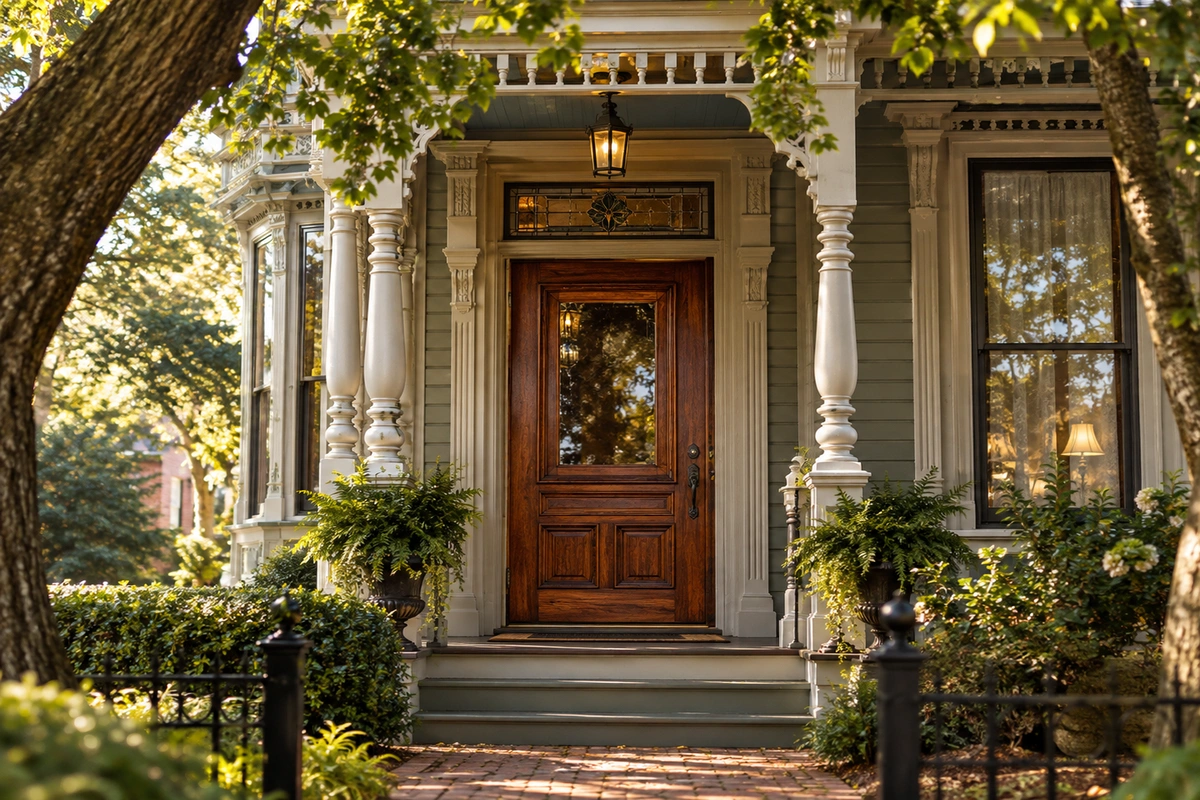
West End is Atlanta’s oldest neighborhood, and its front doors carry that history literally — Queen Anne turrets, Folk Victorian porches, and Craftsman bungalow entries that have survived more than a century of Georgia summers. At DoorStain, we refinish those doors in place, matching stain, sheen, and, where it matters, AUDC-compliant color to the era of the home rather than applying a one-size finish across the neighborhood.
Why West End’s Victorian and Craftsman Doors Need a Specialist
West End began as the community of Whitehall in the 1830s, making it one of the oldest neighborhoods outside downtown Atlanta, and was renamed West End in 1868 after London’s fashionable theater district. In 1870, George Washington Adair and Richard Peters formed the Atlanta Street Railway Company, running streetcar lines along what are now Ralph David Abernathy Boulevard, Lucile Avenue, and Lowery Boulevard — making West End one of the city’s original streetcar suburbs, annexed by Atlanta in 1894. The homes built during that late-19th and early-20th-century boom are exactly what still lines the neighborhood’s blocks today: Craftsman bungalows in all four common configurations, Queen Anne two-story houses, Folk Victorian cottages, Stick-style detailing, Colonial Revival, American Foursquare, and Neoclassical Revival homes, all sitting under a tree canopy nearly as old as the houses themselves.
Atlanta’s Original Streetcar Suburb — From Whitehall to West End
A refinishing job that treats every West End door as interchangeable misses what actually distinguishes the neighborhood. Craftsman bungalows are the single most numerous style here, but Queen Anne and Folk Victorian doors sit on the same blocks, often just a few houses apart, each calling for a different sanding depth, stain tone, and hardware approach. The Wren’s Nest — author Joel Chandler Harris’s Queen Anne Victorian home and a National Historic Landmark — is the neighborhood’s best-known example of the ornate, turned-porch detailing that shows up on doors throughout the district, while the bungalows nearer the Atlanta University Center favor simpler, honest joinery in oak, fir, and heart pine.
A Locally Designated Historic District — What That Means for Your Door
This is the detail that sets West End apart from several of the other in-town Atlanta neighborhoods we serve: West End isn’t just listed on the National Register of Historic Places (added February 25, 1999) — it’s also one of the City of Atlanta’s locally designated Historic Districts, overseen by the Atlanta Urban Design Commission (AUDC). That local designation is a meaningful distinction. National Register status alone imposes no design review; a locally designated district does. In West End, replacing a door with a different style or material, or changing its visible color, generally requires a Certificate of Appropriateness (COA) from the AUDC before the work begins. Refinishing an existing door — stripping, staining, and sealing it back to a matching or historically appropriate tone — is typically treated as routine maintenance rather than an alteration, and doesn’t trigger that review process on its own. Because the line between “maintenance” and “alteration” can depend on the specific scope of work, we recommend confirming with AUDC (404-330-6145) before any project that changes a door’s color, material, or style, and we’re glad to flag when a project looks like it might cross that line during our on-site assessment.
West End is also home to some of Atlanta’s most significant African American cultural landmarks — the Hammonds House Museum, with its collection of works by African and African American artists, and the Herndon Home, former estate of entrepreneur Alonzo Herndon — sitting alongside the Atlanta University Center, the world’s oldest and largest consortium of historically Black colleges and universities. That density of cultural landmarks is part of why so many West End doors carry a weight beyond their own front porch: they’re part of a streetscape residents and preservation groups have worked hard to protect.
Atlanta Humidity and Mature Tree Canopy: What It Does to West End’s Doors
West End’s streets are lined with trees nearly as old as its historic houses, and that mature canopy — combined with Georgia’s humid subtropical climate — creates the same moisture-trapping conditions we see across Atlanta’s older, tree-heavy neighborhoods, intensified here by how tightly the historic lots sit together. Deep Victorian porches and wide bungalow eaves keep doors shaded for much of the day, which reduces direct UV fading but traps humidity against the wood, especially on north- and east-facing entries. Left unaddressed, that pattern shows up as slow, uneven finish breakdown and, eventually, soft wood or mold at the base of the door rather than the fast, even fading you’d see on a sun-exposed suburban entry. Doors on West End’s less-shaded blocks — particularly along the wider commercial stretches near Ralph David Abernathy Boulevard — face the opposite problem: more direct sun exposure and a shorter finish lifespan from UV breakdown. A refinishing plan for West End has to account for which of those two conditions a specific door actually faces rather than treating the whole neighborhood the same.
The BeltLine Westside Trail’s Effect on Nearby Doors
Completed in 2017 and stretching more than three miles through the old rail corridor from Adair Park north to Washington Park, the BeltLine’s Westside Trail cuts directly through West End and brings its own microclimate variable: the trail’s landscaped buffer retains moisture and adds a layer of humidity to homes along its route, on top of what the neighborhood’s tree canopy already traps. Doors on the trail-facing side of a West End property often show more advanced wear than doors on the street-facing side of the same home, which is why we inspect every exposure on a property — not just the most visible one — before recommending a refinishing scope.
Front Door Refinishing for Queen Anne, Folk Victorian, and Craftsman Bungalow Homes
West End’s architectural range is wider than almost any other in-town Atlanta neighborhood we serve, and the refinishing approach has to flex with it.
Queen Anne and Folk Victorian Entry Doors Near the Wren’s Nest
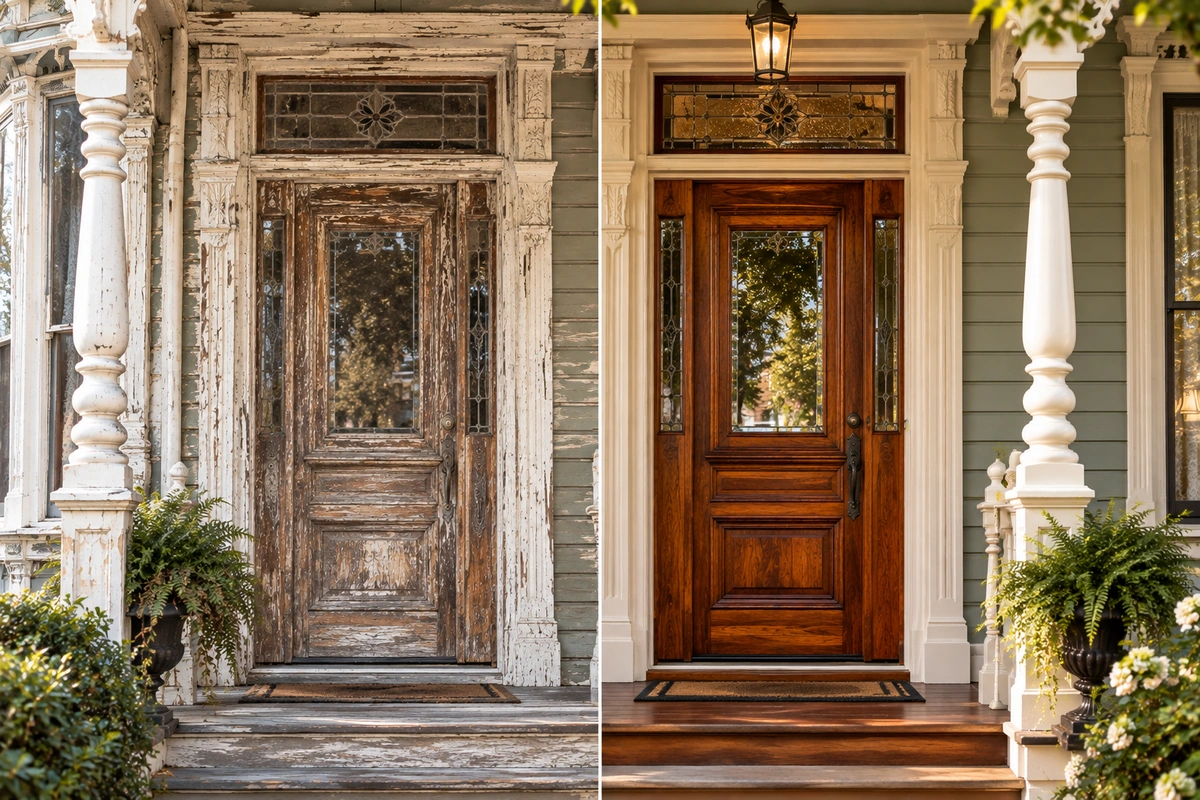
The neighborhood’s oldest doors tend toward Queen Anne and Folk Victorian styles — often narrower, more ornamented doors with turned millwork, sidelights, or decorative glass, set beneath deep wraparound porches. These doors were built from old-growth lumber that doesn’t tolerate aggressive stripping the way modern wood does, so our wood door refinishing process for this style starts with careful hand stripping rather than power sanding, protecting decorative millwork and glass while restoring the wood beneath. We match stain to the era’s typical deep, warm tones and finish in satin, since a high-gloss sheen reads as modern against Victorian-era detailing.
Craftsman Bungalow Doors Along Ralph David Abernathy Boulevard
Closer to the Atlanta University Center and along the neighborhood’s main commercial corridor, Craftsman bungalow doors dominate — heavier paneled doors in oak or fir, set under wide, shaded porches with exposed rafter tails. These doors handle a stripping process more aggressively than their Victorian counterparts, but the same shade-driven humidity pattern applies, so we favor breathable, moisture-managing sealants over film-forming coatings that can trap water in the wood and cause peeling or bubbling.
Garage Door, Transom, and Hardware Restoration Near the BeltLine Westside Trail
West End sits along more than a mile of the Atlanta BeltLine’s Westside Trail, and homes near that corridor see a mix of pedestrian and trail-adjacent moisture exposure that residential streets further from the trail don’t. Our custom door and hardware refinishing services cover what shows up on West End properties beyond the front entry:
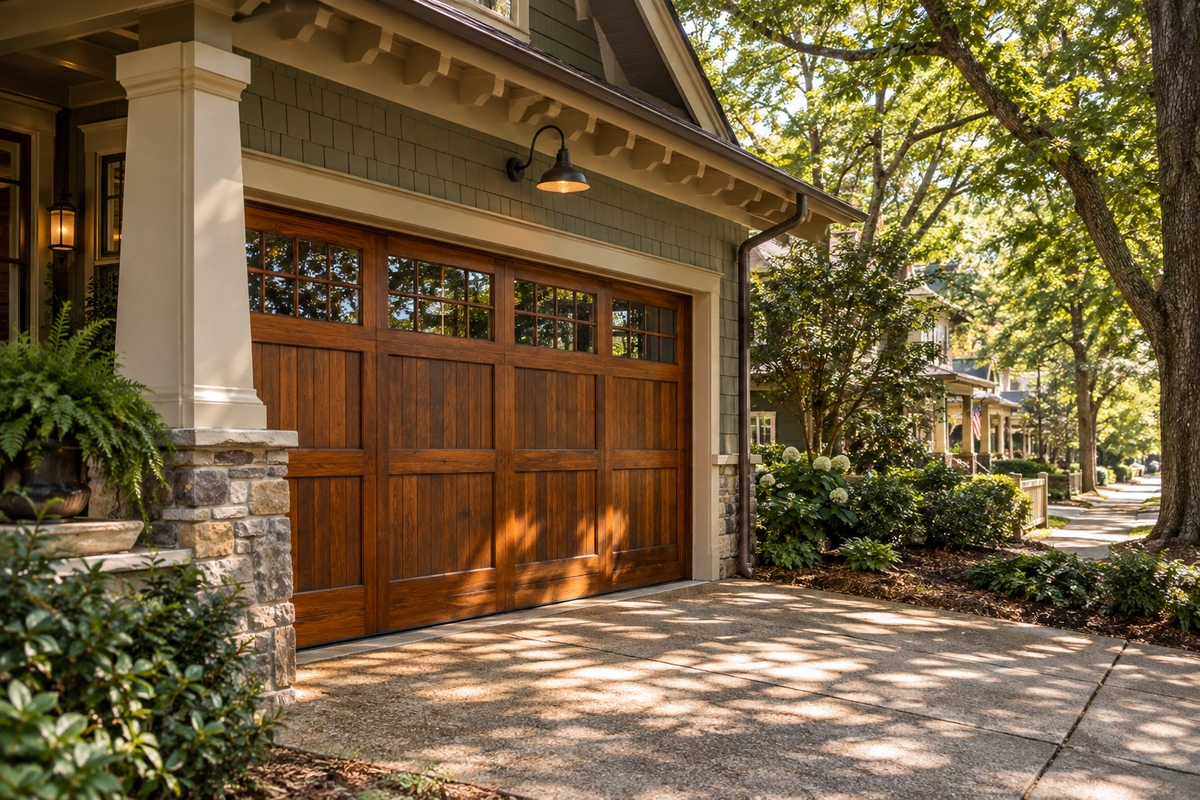
- Wood garage door refinishing — matching the stain tone to the front entry so Victorian and Craftsman properties alike present as one cohesive restoration.
- Transom and sidelight refinishing — many of West End’s Victorian-era doors carry original transom windows and sidelights that need careful masking during stripping and staining rather than removal.
- Brass hardware and hinge restoration — original mail slots, kickplates, and door hardware on West End’s century-old homes generally respond well to careful polishing rather than replacement, keeping the entry consistent with the door itself.
Doors on the neighborhood’s more sun-exposed blocks take a heavier share of UV over the course of a Georgia summer, so we specify a higher-build, UV-inhibiting topcoat on those panels rather than applying the same product across a shaded and unshaded property alike.
Materials Matched to West End’s Climate and Architecture
Because West End compresses one of Atlanta’s widest architectural ranges, a mature tree canopy, and a locally designated historic district into a compact neighborhood, a single finish plan fails faster here than it would on an open suburban lot. The table below maps the dominant condition to the material response we specify.
| Door Type / Exposure | Dominant Threat | Material Response | Typical Finish Profile |
|---|---|---|---|
| Queen Anne / Folk Victorian doors (deep porch) | Trapped humidity, slow finish breakdown, delicate millwork | Hand stripping, breathable moisture-managing sealant | Satin, deep period-appropriate tone |
| Craftsman bungalow panel doors | Humidity-driven finish breakdown under wide eaves | Deeper hand stripping tolerance, breathable sealant system | Satin, amber or antique oak tone |
| Sun-exposed doors near RDA Boulevard | UV fading, faster finish breakdown than shaded blocks | Higher-build UV-inhibiting topcoat, deep-conditioning base coat | Matched to front entry stain tone |
| Transoms & sidelights | Delicate glazing, moisture at the frame joints | Careful masking, joint-focused sealing before staining | Satin, matched to primary door |
West End Door Refinishing Cost and Timeline
Pricing depends primarily on the door’s era, condition, and whether AUDC-compliant color matching is required. The table below breaks down what actually moves the estimate, rather than quoting a single flat number that wouldn’t hold up across West End’s architectural range.
| Cost Factor | Impact on Project Scope |
|---|---|
| Door Era & Construction | Queen Anne and Folk Victorian doors with turned millwork require more careful hand stripping than a Craftsman panel door, changing labor time. |
| Historic District Color Matching | Projects on locally designated properties benefit from archival, AUDC-appropriate color research, especially where a change in color or material may need confirmation. |
| Condition & Prior Coatings | Doors with multiple failed paint or varnish layers need more stripping passes than a door with a single, intact original finish. |
| Transom & Sidelight Complexity | Decorative glass and millwork require careful masking, adding time versus a plain panel door. |
| Hardware Bundling | Bundling brass hardware polishing or a matching garage door with the main refinish is typically more efficient than separate visits. |
Competitor Gap Analysis — Why West End Homeowners Choose DoorStain
Homeowners searching for door help in West End mostly find broad Metro Atlanta refinishers, general window-and-door replacement companies, or handyman listings — none built around this neighborhood’s specific historic-district requirements.
| Competitor Type | Coverage of West End | Gap DoorStain Fills |
|---|---|---|
| Stain Door (atlanta.staindoor.com) | Broad Metro Atlanta page covering Buckhead, Sandy Springs, Marietta, and other suburbs — no West End or in-town historic-district content | Zero neighborhood-specific or AUDC-aware content; generic 9-step process copy applied everywhere |
| Window & door replacement companies | Full-replacement vinyl or fiberglass door installers, common in Yelp/HomeAdvisor listings for the area | Replacement doesn’t preserve original historic material and often triggers AUDC review that refinishing avoids |
| General handyman/restoration listings | Door repair and general restoration work found via Yelp and directory listings | No period-specific stripping calibration for Queen Anne vs. Craftsman panels, no historic-district color guidance |
None of these competitors address West End’s specific mix of architectural styles, its status as a locally designated historic district, or the shaded-porch humidity pattern common to its oldest blocks — leaving this neighborhood-specific search demand largely uncontested.
Why West End Homeowners Choose DoorStain
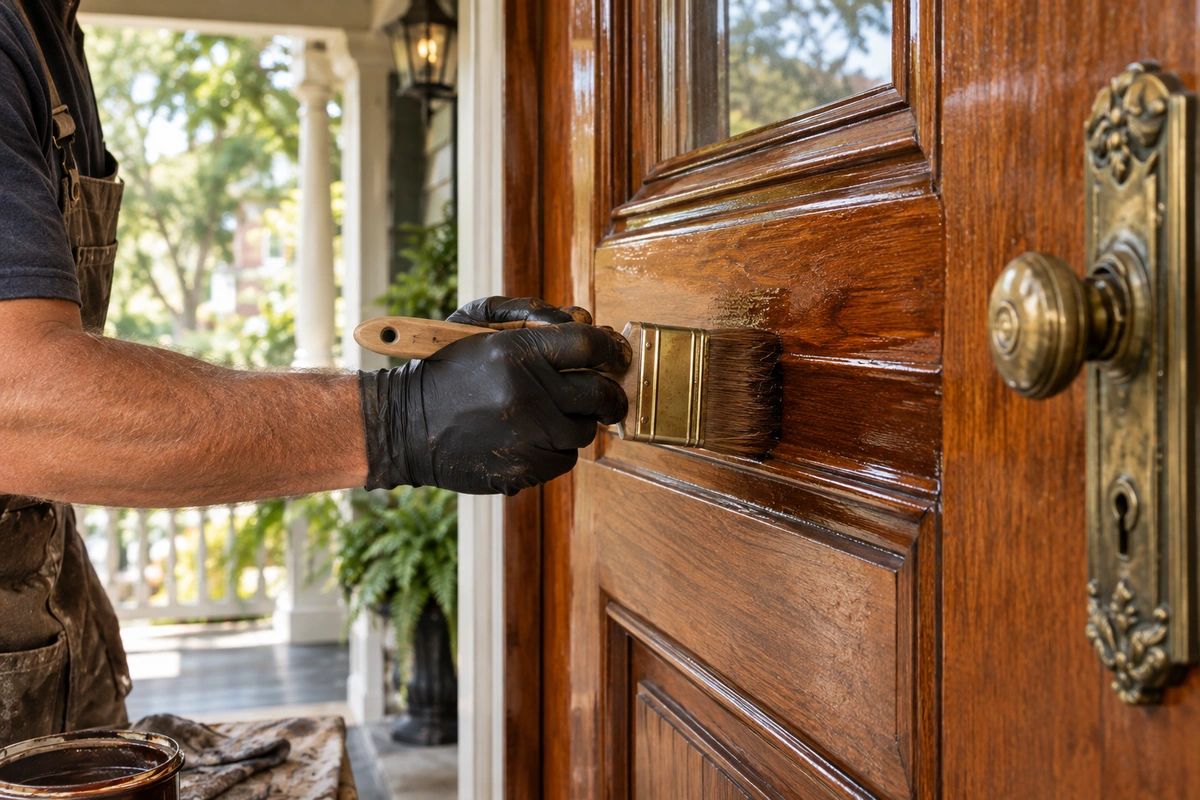
Refinishing a door in a neighborhood with mandatory AUDC oversight means the margin for a mismatched stain or an inappropriate sheen carries real weight — not just aesthetically, but for the property’s standing within a designated district. Our wood door refinishing process brings the same multi-step sanding, staining, and sealing system we use across the Atlanta door refinishing service area — including Fulton County, where same-day door refinishing in Atlanta is available — calibrated to West End’s specific mix of Victorian and Craftsman doors rather than a single stock finish.
We’re backed by a 4.9-star Google rating from 235 verified reviews, and the same on-site process we use for historic entryway restoration in Druid Hills and Virginia-Highland door refinishing carries over to West End’s own historic core. We’ve also documented an Inman Park and Grant Park restoration case study on a 100-year-old oak entry door refinished with oil-based stain and marine varnish — the same approach that suits West End’s oldest Queen Anne and bungalow doors. Homeowners comparing notes with neighbors just east in Candler Park will recognize the same climate-driven finish system, adapted here for West End’s locally designated status.
West End’s tight community — proud, historically rooted, and increasingly protective of its architectural character as redevelopment pressure grows along the BeltLine — means a poorly matched refinishing job doesn’t just look wrong to the homeowner; it stands out against a streetscape neighbors have spent decades preserving. We treat every West End quote with that context in mind, whether the door in question is a landmark-adjacent Queen Anne entry or a straightforward Craftsman bungalow panel door a few blocks off Ralph David Abernathy Boulevard.
What Our Atlanta Customers Say
Authentic reviews matter more in a historic district like West End than almost anywhere else we work. Below are verified Google reviews from DoorStain’s Atlanta customer base.
“A big thank you to Doorstain for the superb wood refinishing job! My floors look stunning, and the team was courteous and professional. Definitely recommending them to others!” — Nanfuka Brenda
“Door Stain Refinishing is the best! They have refinished my doors multiple times, their product is the best and it really does last a long time, even in direct sunlight! They also recently started doing Metal Door Refinishing which is amazing. So far after working with them for 5 years, I can say I am super happy with the results I’ve seen every time. I would definitely recommend them.” — Micrer 3D
“I had a fantastic experience with Door Stain – Door & Restoration in Atlanta. They transformed my wooden doors beautifully with their expert staining and finishing. The team’s professionalism and attention to detail were outstanding. I highly recommend their services to anyone looking to enhance their home with quality woodwork!” — Hossein Sharifi Nasab
⭐ 4.9 out of 5 — 235 verified Google reviews
Get a Free Door Refinishing Quote in West End — Just Send a Photo
Send us a picture of your Victorian or Craftsman door and we’ll follow up the same day with next steps. You can also request a free West End estimate by phone if you’d rather talk it through first: +1 (770) 999-9982.
Free West End Door Refinishing Quote
Want to send photos of your door? Text two or three photos (inside, outside and a wide shot of the entrance) to (770) 999-9982. A clear photo helps us give you an accurate estimate.
Frequently Asked Questions
Does refinishing a door in West End require AUDC approval?
Generally, no. West End is a locally designated City of Atlanta Historic District, so replacing a door or changing its color or material typically requires a Certificate of Appropriateness from the Atlanta Urban Design Commission. Refinishing an existing door back to a matching or historically appropriate tone is normally treated as routine maintenance and doesn’t trigger that review, but we recommend confirming with AUDC for anything beyond a straightforward refinish.
How is West End different from other historic Atlanta neighborhoods you serve?
West End carries both National Register of Historic Places listing (since 1999) and local City of Atlanta Historic District designation with AUDC oversight — a stricter regulatory layer than neighborhoods that are only National Register–listed, like nearby Candler Park.
How much does door refinishing cost in West End?
Most projects run $375–$950 per door depending on size, wood species, condition, and whether historic-district color research is involved. We provide an exact quote after an on-site or photo evaluation.
What’s the difference between refinishing a Queen Anne door and a Craftsman bungalow door?
Queen Anne and Folk Victorian doors are typically narrower and more ornamented, with turned millwork or decorative glass that requires careful hand stripping. Craftsman bungalow doors are heavier paneled oak or fir doors that tolerate a more aggressive stripping process.
How does West End’s tree canopy affect the finish my door needs?
The mature canopy reduces direct UV exposure on shaded porches but traps humidity, which can cause slow finish breakdown and, if untreated, soft wood or mold at the door’s base. Doors on sun-exposed blocks near Ralph David Abernathy Boulevard face faster UV fading instead, so we tailor the topcoat to each door’s actual exposure.
Do you refinish transoms, sidelights, and garage doors too?
Yes. Original transom windows, sidelights, wood garage doors, and brass hardware like mail slots and kickplates are all part of our refinishing scope, and we typically match the tone to the front entry for a cohesive look.
How long does a typical West End door refinishing project take?
Most single-door projects are completed in one to two days on-site. Projects that also involve historic-district color confirmation or bundle a garage door and hardware restoration take a bit longer to schedule.
Can you refinish a door without removing it from the frame?
Yes. We refinish the large majority of West End doors on-site without removing them from their hinges, using careful masking and drop protection to keep porches, transoms, and surrounding trim clean throughout the process.