
Expert Door Refinishing in Rome, GA
Victorian heart pine doors, river-valley weather damage and faded fiberglass entries in Rome: restored on site, usually in one or two days.
✅ Licensed & Insured
🏆 Rome & Floyd County Door Specialists
Text photos to (770) 999-9982. No obligation, fast response.

Senior Wood Refinishing Specialist · Rome & Floyd County
⏱ 13 min read · Published November 2026
Door refinishing in Rome, GA is the on-site restoration of an existing front door, garage door or historic entry: we remove the worn or peeling finish, repair rot and loose joints, strip old paint safely where needed, then stain or paint the door and seal it with a UV-resistant exterior finish. Most single doors are finished in one day. Historic doors with several layers of old paint, double doors and doors with transoms usually need two. Your home is closed and locked every night, and refinishing normally costs a fraction of having a new door made to fit an old opening. Send a few photos and we can usually quote the same day.
Rome is the county seat of Floyd County and the largest city in northwest Georgia, with close to 38,000 residents. It was built on seven hills where the Etowah and Oostanaula rivers meet to form the Coosa, and that setting shapes almost everything about the town, from its street plan to the way its houses age. Rome has one of the best collections of late nineteenth- and early twentieth-century homes in this part of the state, along with Berry College and Shorter University, a downtown on Broad Street and newer neighborhoods spreading out toward the county line. For our Atlanta-based door refinishing team, Rome is one of the most rewarding places to work, because so many of its original doors are still worth saving.
River Valley Humidity and What It Does to Rome Doors
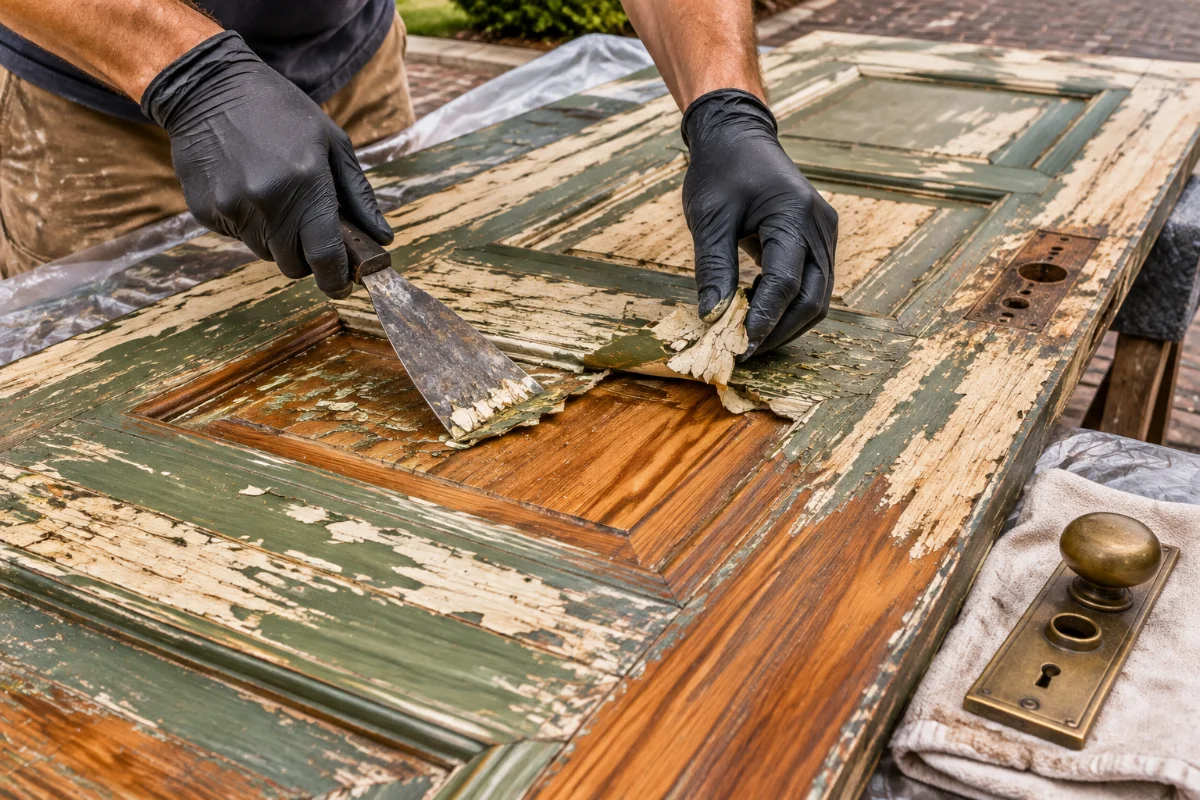
Three rivers bring a lot of moisture into the air. Rome sits low in the valley, and on many mornings in spring and fall, fog settles over the rivers and the older neighborhoods closest to them. Summer is hot and humid, and the town gets heavy rain spread across the year. Wood doors take on moisture through any gap in their finish, then dry out again on hot afternoons. That constant swelling and shrinking cracks the finish, lifts paint at the joints and eventually opens the door’s own glue lines.
The bottom rail suffers most. Water runs down the face of the door, collects on the threshold and soaks into the end grain at the bottom, which on many doors was never sealed at the factory or the mill. On older Rome porches, where the floor is close to the threshold and rain splashes back onto the door, we often find soft wood in the lower corners even when the rest of the door looks fine. Freezing winter nights add to the damage by pushing water further into small cracks.
| Rome condition | Typical door damage | Our approach |
|---|---|---|
| River fog and high humidity | Swelling, lifting paint, open joints | Seal all six sides, re-glue or pin loose joints |
| Heavy rain and splash-back on low porches | Soft wood at the bottom rail and corners | Epoxy consolidation or wood dutchman repair |
| Hot afternoon sun on hillside lots | Faded stain, failed clear coat, checked grain | UV-resistant marine varnish in several coats |
| Old paint layers on historic doors | Thick, cracked paint that hides detail | Lead test, then chemical stripping with containment |
| Winter freeze-thaw | Cracked glazing, loose glass | Reglaze and reseal glass before the cold |
Historic Homes and Their Original Doors
Rome’s historic neighborhoods, including the Between the Rivers district downtown and older streets in East Rome and on the hills above Broad Street, have Victorian, Queen Anne, Neoclassical and Craftsman houses built from the 1870s through the 1920s. Their front doors are often tall, heavy and beautifully made: four- or five-panel doors with raised moldings, doors with large oval or arched glass, and double doors with a transom above. Most were made from old-growth heart pine, oak or poplar, which is denser and more stable than almost any wood available today.
On many of these houses, the original door has been painted again and again over a hundred years. Under the paint, the wood is usually still solid. We see this as one of the strongest arguments for refinishing instead of replacing: a new door will never quite match the proportions, the molding profile or the color of old heart pine, and fitting a new door to an old, slightly out-of-square opening is expensive.
Lead-safe stripping
Any door painted before 1978 may have lead in its lower layers, and on Rome’s older homes it is common. We test before starting. If lead is found, we do not dry sand. We use chemical stripping, wet scraping, plastic containment and HEPA cleanup, and we keep the work area closed off from the rest of the house. It takes longer, but it is the right way to handle an old door, especially in homes with children.
Glass, transoms and hardware
Older Rome doors often still have original glass, sometimes slightly wavy, and old mortise locks, hinges and knobs. We remove and label the hardware, clean it and reinstall it, and we protect the glass carefully during stripping. Where the glazing putty has dried out and cracked, we reglaze the glass so water can no longer get behind it. Transoms are refinished along with the door so the whole entry matches.
Historic District Rules in Rome
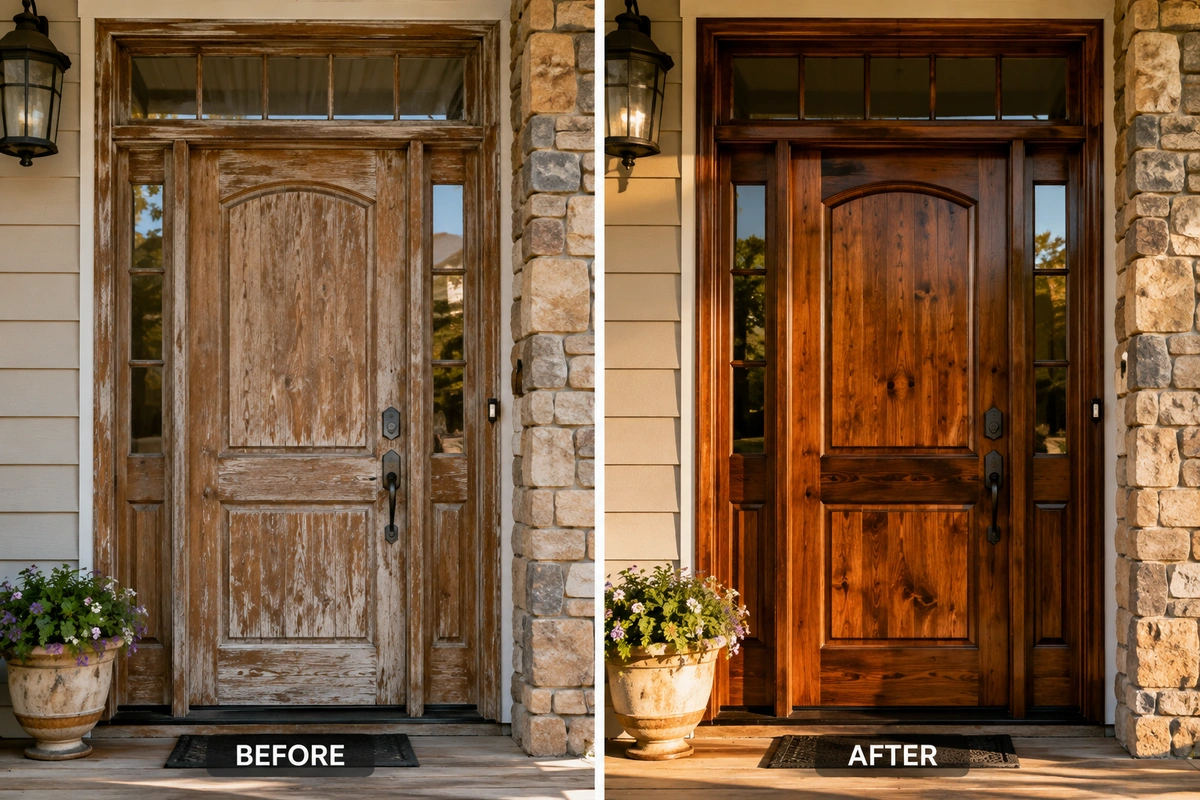
Parts of Rome are locally designated historic districts, and the Rome-Floyd County Historic Preservation Commission reviews certain exterior changes there. Refinishing a door in its existing color and finish usually does not change its appearance at all. Replacing an original door, changing its style or making a big change in color can be different, so if you live in a designated district and plan anything beyond a straight refinish, it is worth checking with the city before work starts. We are happy to provide photos and a description of the work for that conversation.
In practice, owners in the historic districts usually want what the commission wants: to keep the original door, the original wood and the original hardware. That is exactly what restoration does.
Newer Homes Across Floyd County
Not every Rome door is a century old. The neighborhoods that grew up in West Rome, North Rome and toward Armuchee and Coosa, along with newer subdivisions near the bypass, have brick ranches from the 1950s through 1970s, two-story traditional homes from the 1990s and 2000s and many new builds. Their doors are a mix of solid wood, fiberglass with wood-grain texture and steel. On these homes, the problem is almost always sun and weather on the finish rather than the age of the wood.
Fiberglass doors fade and turn chalky, especially when they face south or west. We clean and scuff them, apply a gel stain to bring the grain back and seal them with a clear topcoat made for fiberglass. Steel doors usually start rusting at the bottom edge, which we treat before priming and repainting. Wood doors on newer homes are often in great shape under a failed finish and only need a full refinish to look new again. Our page on refinishing exterior doors of every material explains the differences in more detail.
Our Process on a Rome Door, Step by Step
Every job starts with a walk-around with the owner, so we agree on the finish and color before anything is removed. After that, the work follows the same order on almost every door:
- Protect the floor, porch, trim and any nearby furniture, and remove or mask the hardware.
- Test for lead on painted doors from before 1978, then strip or sand the old finish.
- Repair rot, splits, loose joints and old hardware holes, and reglaze loose glass.
- Sand the door smooth and apply stain or primer and paint in the chosen color.
- Seal the face, the edges and the top and bottom with several coats of UV-resistant exterior finish.
- Reinstall the hardware, adjust the door so it latches cleanly and clean the whole work area.
A straightforward door with a weathered finish is usually completed in a day. A historic door that needs lead-safe stripping and joint repairs, or a double door with a transom, usually takes two days. The door is always hung and locked between work days.
Refinishing Versus Replacing a Door in Rome
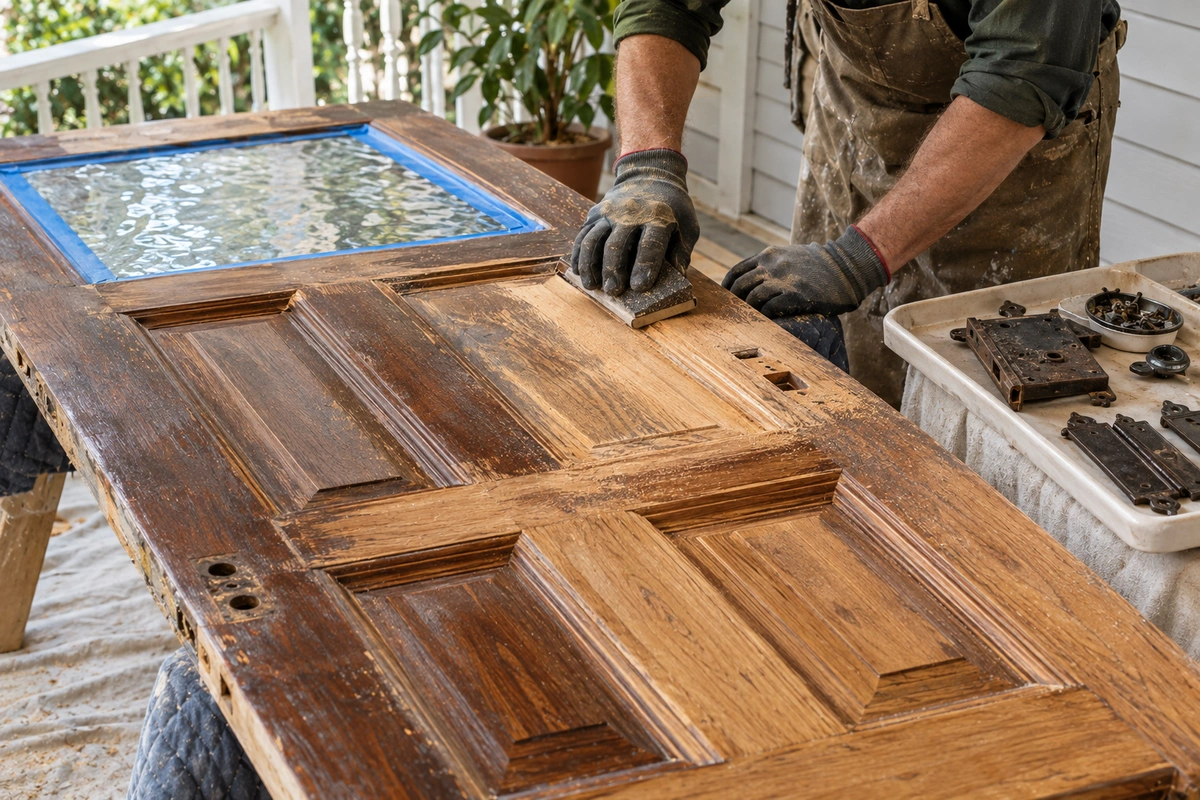
For most Rome homeowners, refinishing is the better value. A new solid wood entry door is expensive by itself, and on older homes it also needs to be custom-sized, fitted to the existing frame and painted or stained to match the trim. On newer homes, a large double door with decorative glass is one of the most expensive items on the house. Refinishing keeps the door and frame you have and costs a fraction of the price.
| Door condition | Refinish | Replace |
|---|---|---|
| Weathered, faded or peeling finish | Yes, usually one day | No |
| Painted historic door with sound wood | Yes, lead-safe strip and refinish | Not recommended |
| Soft wood in a corner or the bottom rail | Yes, repair then refinish | Rarely needed |
| Chalky fiberglass door | Yes, gel stain and topcoat | Rarely needed |
| Door rotted through or badly warped | Sometimes not worth it | Often the better choice |
We will give you an honest opinion. When a door really is beyond repair, we will tell you so before any work starts.
Garage Doors, Porches and Exterior Wood
Many homes around Rome have wood or wood-look garage doors, carriage doors on detached garages and wood shutters that age just like the front door. We refinish garage doors on site, often on the same visit as the entry, so the colors match. Details are on our page about refinishing wood garage doors.
Older Rome homes also often have rotted door jambs, brick mold or porch trim around the entry. Small repairs like these are best done while the door is being refinished, and our exterior wood repair service handles them before the new finish goes on.
Downtown Businesses, Churches and College Buildings
Broad Street and the surrounding downtown blocks have restaurants, shops, offices and churches with wood doors that see heavy daily use, along with older buildings where the original doors are part of the building’s character. We schedule commercial work around opening hours, often starting early in the morning or working on weekends, so the business never has to close. Our door refinishing for businesses and churches covers this kind of work.
Interior Woodwork in Older Rome Homes
Historic homes in Rome often have original interior doors, staircases, mantels and built-in cabinets that have been painted or have darkened with age. We refinish these with the same care as an exterior door, protecting floors and the rest of the room. See our interior wood refinishing service for more.
Choosing a Color That Suits a Rome House
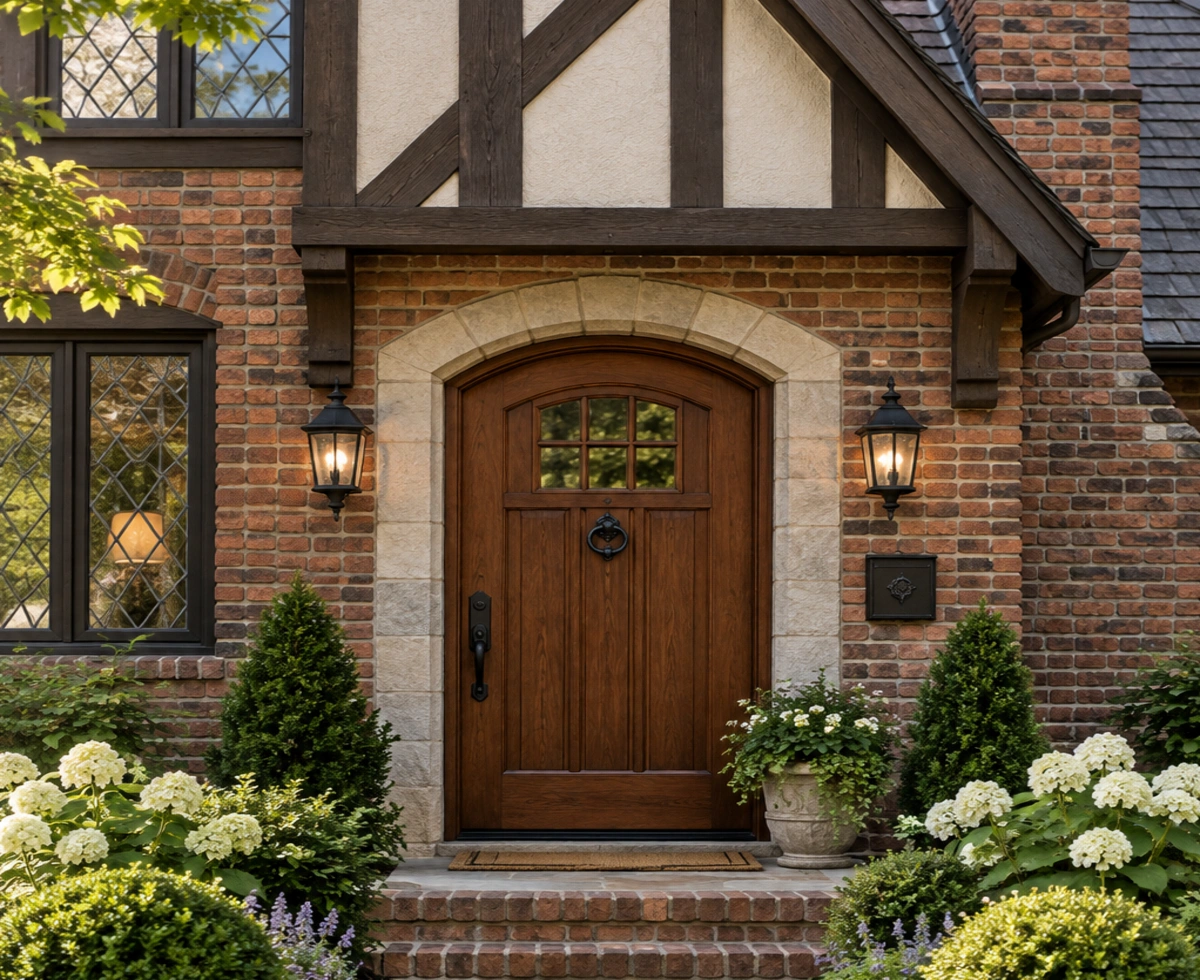
On Victorian and Queen Anne houses, the original doors were often stained and varnished in warm, deep tones, or painted in rich colors that matched the trim scheme of the period, such as deep green, oxblood red or dark brown. If you want a historically appropriate look, we can help you choose between a natural stain on the original wood and a period-style painted finish. On Craftsman bungalows, medium and dark oak or fir-toned stains are the classic choice and look especially good with a painted frame.
On the brick ranches and newer homes around Floyd County, the most popular choices are warm mahogany and walnut stains against red brick, and navy, black or deep green paint on white or gray siding. If you are in a subdivision with an HOA, ask for the approved color list first. We can match an existing stain on a garage door or shutters so the whole front of the house looks coordinated.
Rentals, Student Housing and Investment Properties
With two colleges in town, Rome has a lot of rental housing, much of it in older homes near downtown and the campuses. Front doors on rentals take more abuse than most: frequent move-ins and move-outs, keys and boxes scraping the finish and long stretches where nobody looks after the door at all. For landlords, refinishing is usually the fastest and least expensive way to make a property look cared for between tenants. We can work while a unit is empty, or coordinate with tenants so the door is never left open, and we can handle several doors on the same property in one visit.
Planning Around Rome’s Weather
We refinish doors all year, but we plan each job around the weather. In summer we start early so stain and the first coats go on before the door is in direct sun, and we never finish a door that is too hot to touch. In winter we watch the overnight lows, since exterior finishes need several hours above a minimum temperature to cure properly. On humid, foggy mornings near the rivers we let the wood dry before sealing it. If rain moves in during a job, the door is closed, protected and finished on the next dry day, so nothing is rushed.
If you are planning to sell, paint or have other exterior work done, let us know the schedule. Refinishing the door after the siding or trim is painted keeps the new finish clean and avoids having to mask it.
Caring for a Refinished Door
A good finish lasts much longer with a little attention. Wash the door gently a few times a year with mild soap and water, especially after the spring pollen. Avoid pressure washers. Keep the gutters above the entry clear so water does not run down the door, and check the bottom rail and the glass each spring for small cracks in the finish.
Every one to three years, depending on sun exposure, a light maintenance coat keeps the door protected and avoids another full strip. Our yearly door care plan takes care of that on a schedule.
Customer Reviews
The Door Stain reviews below are quoted word for word from verified Google reviews and testimonials on our website.
“They transformed my wooden doors beautifully with their expert staining and finishing. The team’s professionalism and attention to detail were outstanding.” — Hossein Sharifi Nasab, Google review
“The team at Door stain were amazing to work with! They crafted a one-of-a-kind door that surpassed my expectations & brought my vision to life. Dennis was great to work with & walked me thru every step of the process in detail.” — Coen Jeffrey, Google review
“I have an antique door and these guys have refinished my door & side lites 2 times so far. They are very professional, priced right, and did a great job. Our door looks brand new.” — Adam Brooks, Sandy Plains, GA
Owners of older homes are some of our most loyal customers, and Rome has more original doors worth saving than almost any town in northwest Georgia.
Free Door Refinishing Quote in Rome
For a free door refinishing quote in Rome, upload a photo of the whole door, a close-up of the worst spot and one of the bottom rail using the form below. Let us know if the house is in a historic district. Door Stain LLC, 2582 Post Oak Tritt Rd, Marietta, GA 30062, works on site in Rome and across Floyd County. Call or text +1 (770) 999-9982.
Free Door Refinishing Quote: Rome, GA
Fill in the short form below, or text photos of your door to (770) 999-9982 for the fastest estimate.
Door Refinishing Near Rome
From Rome we serve much of northwest Georgia. To the east are Cartersville door refinishing and Euharlee door restoration, and to the northeast door refinishing in Adairsville and door restoration in Calhoun. Heading southeast toward Atlanta we work in Dallas door refinishing, door refinishing in Hiram, Villa Rica door refinishing and Acworth door restoration. Browse our full service area for every location.
Rome Door Refinishing Questions
These are the Rome door refinishing questions we get most often. More answers are on our general FAQ page.
How long does door refinishing take in Rome?
Most single doors take one day. Historic doors with old paint, double doors and doors with a transom usually take two days. The door is closed and locked every night.
Can you restore the original door on my historic Rome home?
Yes. Most original doors are heart pine, oak or poplar and are well worth saving. We strip old paint safely, repair joints and rot, reglaze the glass and refinish the door.
Do old Rome doors have lead paint?
Many do, because they were painted before 1978. We test first and, if lead is present, use chemical stripping, wet methods, containment and HEPA cleanup instead of dry sanding.
Do I need approval to refinish a door in a historic district?
A refinish in the existing color usually does not change the appearance. For a new color, a different style or a replacement, check with the Rome-Floyd County Historic Preservation Commission first.
Why is the bottom of my door rotting?
Water runs down the door, sits on the threshold and soaks into the unsealed bottom edge. We repair the soft wood and seal all six sides of the door.
Do you refinish fiberglass and garage doors too?
Yes. We gel stain and seal faded fiberglass doors and refinish wood and faux-wood garage doors on site.
How do I get a quote?
Upload photos through the form on this page or text them to +1 (770) 999-9982. We usually reply the same day.