
Expert Door Refinishing in McDonough, GA
Heart pine doors near the courthouse square, church and storefront entries, and fiberglass doors on newer homes: we restore McDonough doors on site.
✅ Licensed & Insured
🏆 McDonough & Henry County Door Specialists
Text photos to (770) 999-9982. No obligation, fast response.
Senior Wood Refinishing Specialist · McDonough & Henry County
⏱ 13 min read · Published November 2026
Door refinishing in McDonough, GA is the on-site restoration of your existing door, whether it is a century-old heart pine door near the courthouse square or a fiberglass entry on a newer subdivision home: we remove the failing finish, repair the wood or surface, re-stain or repaint and seal the door with a UV-resistant exterior coating. Most single doors are finished in one day, historic doors that need paint stripping or repairs usually take two, and your home is never left open overnight. Refinishing is typically far less expensive than replacing a door, and we can quote from photos, usually the same day.
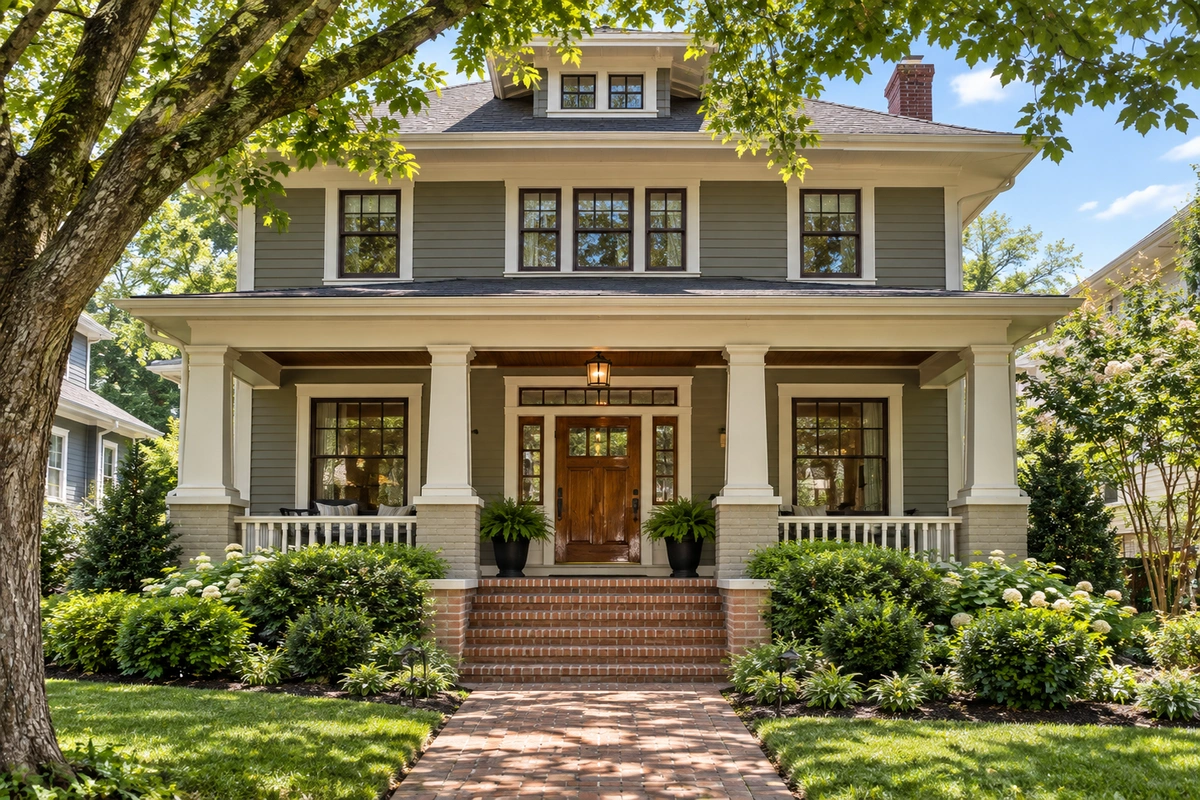
McDonough is the county seat of Henry County and one of the fastest-growing cities on the south side of metro Atlanta. Its heart is the courthouse square, where the Romanesque Revival Henry County Courthouse, built in 1895 to 1897, looks out over rows of brick storefronts. Around the square, the McDonough Historic District covers about 200 acres and was added to the National Register of Historic Places in 2007, with buildings dating back as far as 1823. Beyond the historic core, newer neighborhoods have spread in every direction. That mix of old and new makes McDonough one of the more varied places our Atlanta door refinishing team works.
Historic Doors Around the Courthouse Square
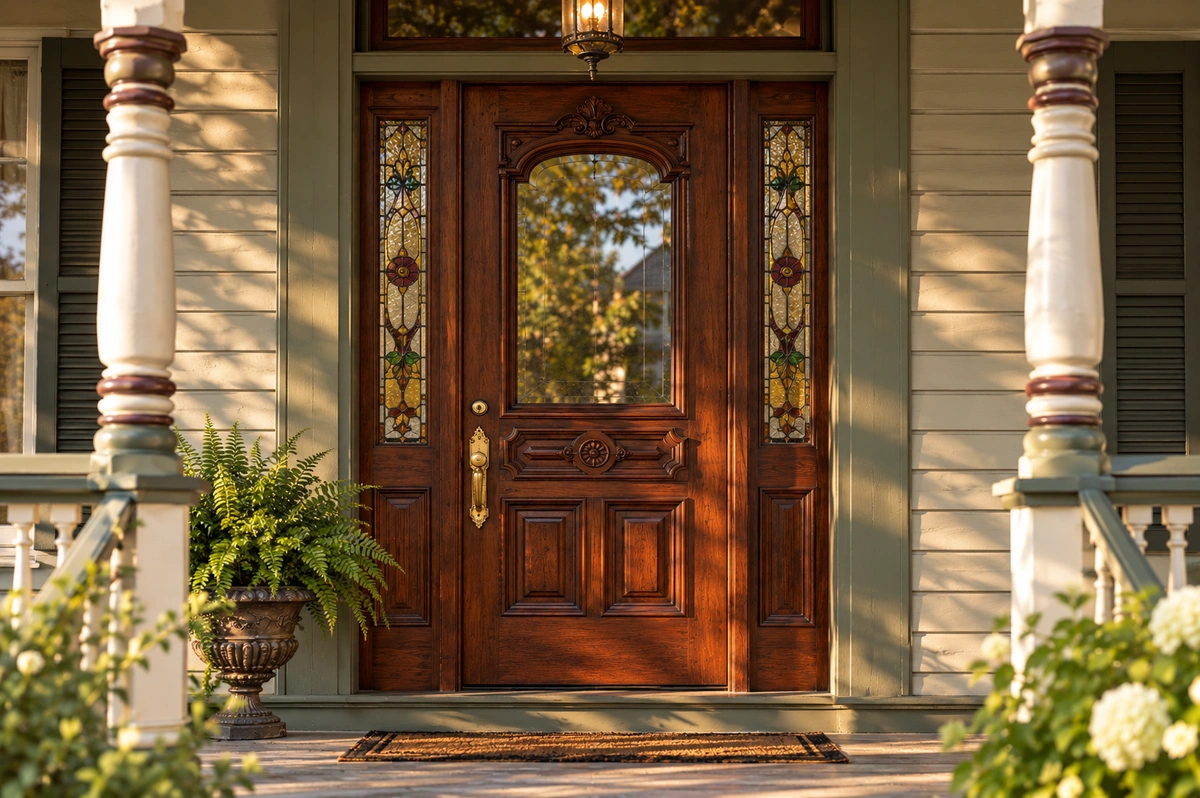
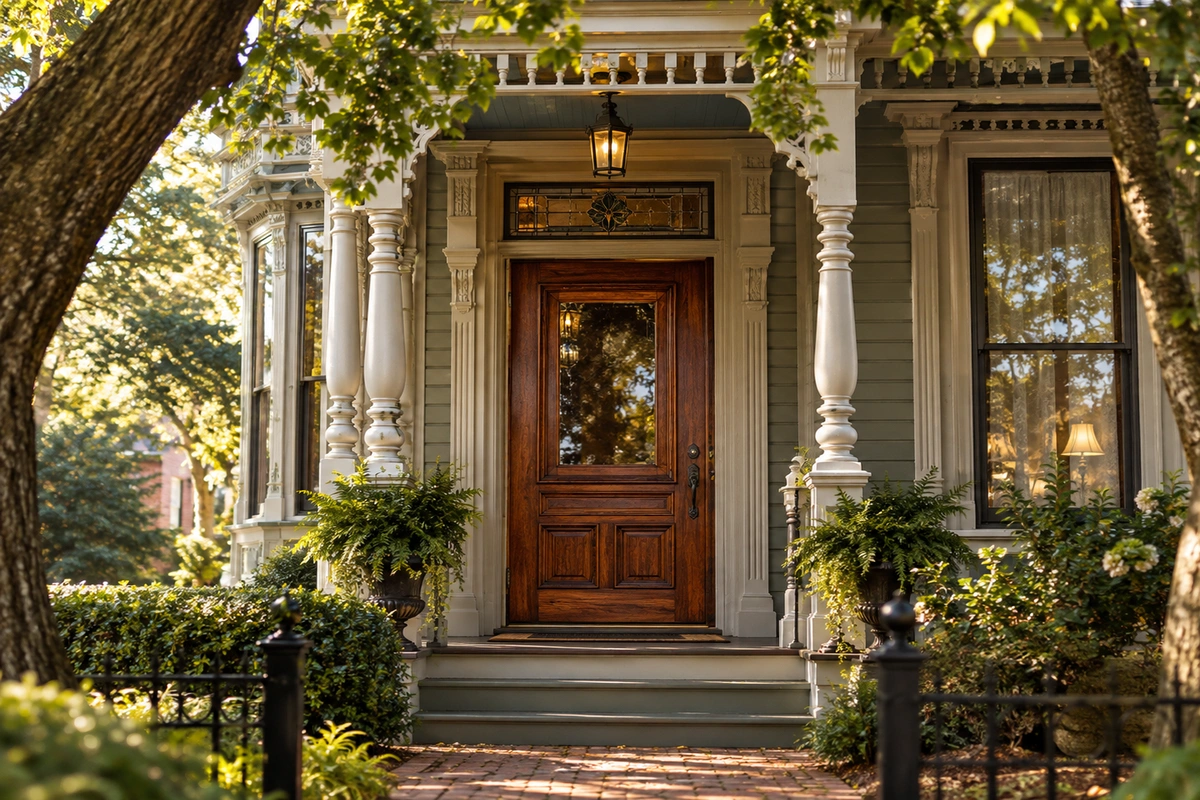
The streets around the square, including Griffin Street and Keys Ferry Street, are lined with Late Victorian houses, early twentieth-century cottages and bungalows, churches and commercial buildings. Landmarks such as the Globe Hotel, built in 1827, the First Baptist Church of 1903 to 1904 and the 1912 building that once housed the Palace Theatre give the district its character. Front doors here are often original: four- and five-panel heart pine or old-growth fir doors, doors with large glass panels, double doors and entries with transoms and sidelights.
These doors are worth saving. Under layers of paint or failed varnish, the wood is usually sound, and old heart pine has a color and grain that no modern door can match. Restoring them takes patience. We expect lead in older paint, so we test first and use chemical stripping with wet methods and containment rather than power sanding. We re-glue loose joints, rebuild rotted corners with epoxy or matching wood, re-glaze loose glass and keep original hardware wherever we can.
Working within a historic district
If your home or building is in the historic district, changes to the exterior may need approval from the city before work begins, especially if you plan to change a door’s color or style. Refinishing an existing door in the same color is usually straightforward, but it is always worth checking first. We are happy to provide color samples, product information or photos for an application, and to work from whatever color you settle on.
| McDonough property type | Typical door | Common problem | Our approach |
|---|---|---|---|
| Late Victorian or early 1900s home near the square | Heart pine or fir panel door, often with transom | Heavy paint layers, loose joints, dried glazing | Lead test, chemical strip, joint and glass repair, stain or paint, marine varnish |
| Downtown storefront or church | Large wood double doors, glass storefront doors | Heavy wear, sun damage, peeling finish | After-hours refinishing with a hard-wearing exterior finish |
| 1970s to 1990s brick home | Six-panel wood door or double doors | Grey or peeling finish, soft bottom rail | Sand or strip, epoxy repair, re-stain, three coats of varnish |
| 2000s and newer subdivision home | Fiberglass or steel entry, often with glass inserts | Faded factory stain, chalky surface, rust | Gel stain or direct-to-metal coating, clear UV topcoat, HOA color match |
Newer Neighborhoods and Builder-Grade Doors
Most McDonough homes outside the historic core were built in the last few decades, as Henry County grew quickly along I-75 and the surrounding highways. These are typically two-story or ranch-style houses in planned subdivisions, often with an HOA. Front doors are usually fiberglass with a wood-grain texture and a decorative glass insert, steel doors painted to match the trim, or stained wood doors with sidelights.
Builder finishes were never designed to last decades in full Georgia sun. Fiberglass stain fades and chalks, steel doors chip and rust at the bottom edge, and wood doors grey and peel. In most cases the door itself is still perfectly good. Refinishing restores the finish, adds proper UV protection and can match the colors your HOA requires. Send us the approved color list, and we will match it or prepare samples for you to submit.
Fiberglass and Steel Doors on Newer Homes
Fiberglass is the most common front door material in McDonough’s newer subdivisions. It does not rot, but the factory stain fades and turns chalky in direct sun within a few years. We clean the door thoroughly, lightly scuff the surface, apply a gel stain in the original color or a new one and seal it with a clear exterior topcoat made for fiberglass. Steel doors, which are common on garage entries and back doors, get rust treatment, a direct-to-metal primer and a durable exterior enamel, or a faux wood-grain finish if you would like them to look like stained wood.
Stoops, Thresholds and the Bottom of the Door
Whether the house is a Victorian near the square or a new two-story in a subdivision, the bottom of the door is usually where the damage starts. Rain splashes off the porch or stoop onto the bottom rail, and water running down the face of the door collects at the lowest joint. On wood doors that leads to rot; on steel doors it leads to rust hidden behind the weatherstrip. When we refinish, we always seal or treat the bottom edge of the door, which is usually left unprotected from the factory, and check that the sweep and threshold are working. A new sweep or a small drip cap above the door can add years to a new finish.
McDonough Weather and Door Damage
McDonough has hot, humid summers, frequent thunderstorms, heavy pine pollen every spring and short winters with occasional hard freezes. Wood doors take on moisture for months at a time and then dry out, and that constant movement cracks the finish along panel edges and joints. Once water gets underneath, the wood darkens and softens, usually starting at the bottom rail.
Sun exposure is the other big factor. Many newer subdivisions have few large trees, so front doors facing south or west take direct afternoon sun for most of the year. Ultraviolet light fades stain, breaks down varnish and chalks fiberglass. On older streets near the square, big oaks provide shade, but shaded doors stay damp longer and grow mildew. We choose the preparation and finish to suit the exposure of each door.
Our Door Refinishing Process
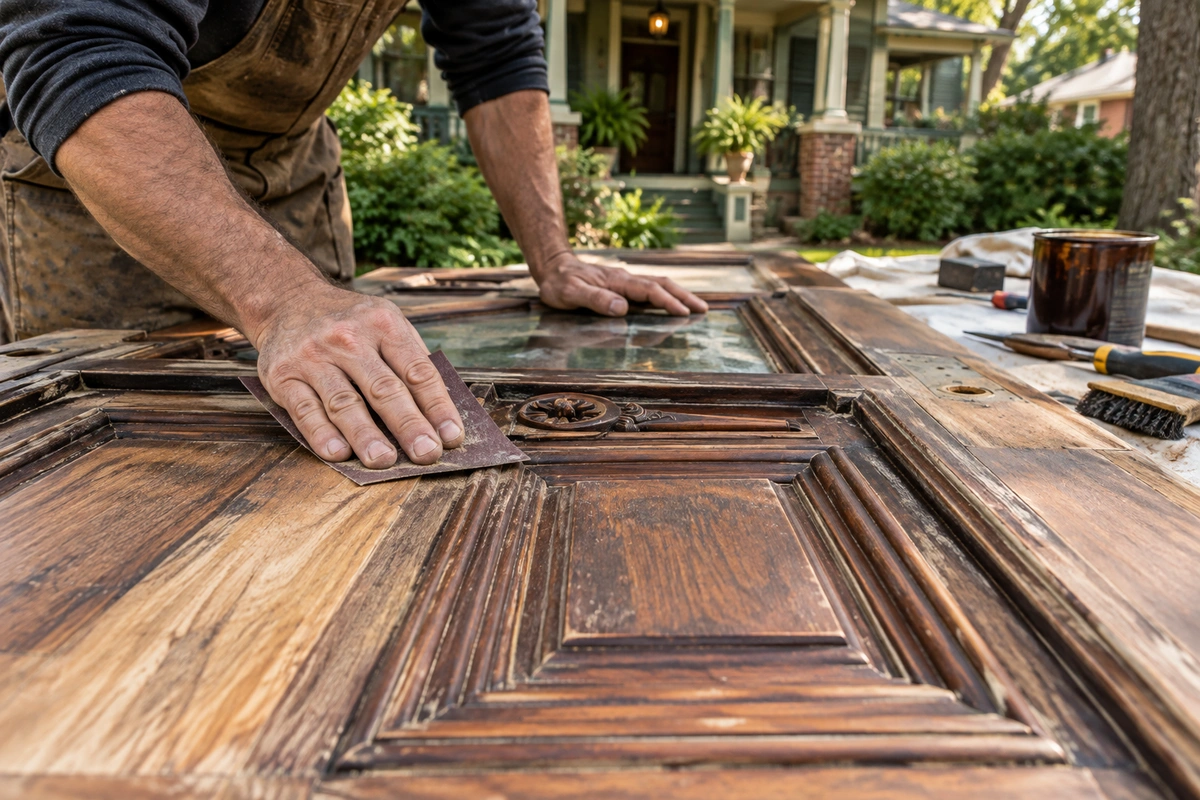
We work at your home or building, and most doors stay on their hinges. Each job follows the same careful method we use across all of our exterior door refinishing work:
- Inspect the door with you and agree on color, checking historic district or HOA requirements.
- Test for lead on painted doors from before 1978.
- Protect floors, trim, glass and hardware, or remove the hardware.
- Remove the old finish by sanding, or chemical stripping where there is heavy paint or lead.
- Repair rot, splits, loose joints, dents and rust, and re-glaze loose glass.
- Apply stain or primer and paint, then several coats of UV-protective exterior finish.
- Reinstall hardware, adjust the door so it closes and seals properly, and clean up.
If a historic door needs more than surface repair, such as a rebuilt stile or a new bottom rail section, our wood repair and restoration specialists handle it during the same project.
Storefronts, Churches and Downtown Buildings
The brick storefronts around the courthouse square, the churches nearby and offices throughout the city all have entrance doors that see heavy use. Large wood double doors on churches and older commercial buildings are expensive and difficult to replace, and they usually restore beautifully. We schedule commercial work early in the morning, after hours or on weekends so the building can stay open, and we refinish one leaf of a double door at a time when needed so the entry stays secure. See our commercial door refinishing page for more.
Choosing Stain or Paint
On historic houses, the right finish often depends on what the door originally had. Many Victorian and early twentieth-century doors were stained or grained, while others were painted to match the trim. A medium to dark walnut or a traditional red mahogany stain usually suits a heart pine door, and painted doors in deep greens, reds or black are common on older homes. On newer brick homes, dark walnut and espresso stains are popular, and painted navy or black doors suit lighter siding.
We can test a few colors on a hidden area of the door so you can see the result in your own light before we start.
Glass, Transoms and Sidelights
Older McDonough doors often have large glass panels, transoms or sidelights, and newer doors usually have decorative glass inserts. Glass is where water most often gets in. On historic doors, glazing putty dries out and falls away, and rain runs behind the glass into the wood. On newer doors, the plastic frame around the insert can loosen or its seal can fail. We remove failed putty or caulk, re-bed or re-seal the glass and protect it carefully while we refinish.
Side Doors, Back Doors and Patio Doors
The front door is usually the priority, but most McDonough homes have other exterior doors that take just as much weather: the door from the garage to the yard, a back door onto the deck and sometimes wood French or patio doors. On older homes near the square there may be side porch doors and original screen doors as well. We can refinish or repaint all of these during the same visit, which keeps colors consistent across the house and is usually more economical than handling each door separately.
Garage Doors and Interior Woodwork
On newer McDonough homes, the garage door often takes up more of the front of the house than the entry door does, and a faded or rusting garage door drags down curb appeal. We repaint or wood-grain steel garage doors and strip, stain and seal wood ones, ideally at the same time as the front door so the colors match. Learn more on our garage door refinishing page. For historic homes, our custom wood refinishing team can also restore original interior doors, stair rails, mantels and trim.
Rental Homes and Investors
With so much new construction, McDonough also has a large number of rental homes. For landlords and investors, a refreshed front door and garage door are among the least expensive ways to improve curb appeal before listing a property. Most doors take a single day, so the work fits easily into a turnover schedule. For owners with several homes, we can keep one standard color across all of them and record the products used, so future touch-ups always match.
Mistakes That Shorten a Door’s Life
Some mistakes come up again and again. Interior polyurethane brushed over a weathered exterior door looks good for a season and then peels in sheets because it has no UV protection. Spray paint on a steel or fiberglass door peels quickly because it does not bond properly. Painting over rust without treating it lets the rust bubble back through, and painting over mildew lets the black spots bleed straight back. On historic doors, heavy power sanding can round over the crisp edges of old panels and moldings.
Pressure washing is another common one. It seems like a fast way to clean a door, but it drives water deep into the wood, raises the grain and can loosen glazing around glass. A soft brush, mild soap and a gentle rinse with a hose is all a door needs.
Refinish or Replace?
For historic doors, refinishing is almost always the right choice. The door fits its opening, matches the age of the house and is made from wood that is hard to find today. Replacing it can change the character of the building and may not be allowed in the historic district. For newer doors, refinishing makes sense whenever the door is structurally sound; replacement is better when a fiberglass skin is cracked, rust has eaten through a steel door, or a wood door is badly warped or rotted into the frame. We will tell you honestly which option makes sense.
What Affects the Price
Each quote is based on the actual door. The main factors are below.
| Factor | Simpler job | More involved job |
|---|---|---|
| Door type | Fiberglass or wood door in good shape | Historic door with heavy paint and repairs |
| Size | Single door | Double doors, transom or sidelights |
| Lead | Door finished after 1978 | Lead found in older paint |
| Repairs | Surface wear only | Rot, loose joints, glass re-glazing or rust |
| Approvals | Same color refresh | Color change needing samples for approval |
Looking After Your Door
A refinished door lasts much longer with a little care. Clean it gently with mild soap and water a few times a year, especially after pollen season, and never use a pressure washer. Keep gutters above the entry clear, and check the bottom rail and the edges of any glass each spring for small cracks or worn spots.
Most doors need a light maintenance coat every one to three years, depending on sun and weather. Our annual door maintenance program schedules this for you and costs far less than another full refinish.
What Door Stain Customers Say
These Door Stain reviews are quoted word for word from our verified Google Business Profile and website testimonials.
“I have an antique door and these guys have refinished my door & side lites 2 times so far. They are very professional, priced right, and did a great job. Our door looks brand new.” — Adam Brooks, Sandy Plains, GA
“The team at Door stain were amazing to work with! They crafted a one-of-a-kind door that surpassed my expectations & brought my vision to life. Dennis was great to work with & walked me thru every step of the process in detail.” — Coen Jeffrey, Google review
“Door Stain Refinishing is the best! They have refinished my doors multiple times, their product is the best and it really does last a long time, even in direct sunlight!” — Micrer 3D, Google review
Customers with antique doors often come back to us each time the finish needs attention, which suits the historic homes around McDonough’s square.
Request a Free Door Refinishing Quote in McDonough
For a free door refinishing quote in McDonough, upload a photo of the whole door, a close-up of the worst damage and one of the bottom rail and threshold. Let us know if the property is in the historic district or has HOA color rules. Door Stain LLC, 2582 Post Oak Tritt Rd, Marietta, GA 30062, works on site across McDonough. Call or text +1 (770) 999-9982.
Free Door Refinishing Quote: McDonough, GA
Fill in the short form below, or text photos of your door to (770) 999-9982 for the fastest estimate.
Door Refinishing Near McDonough
McDonough is close to several areas we serve. To the southwest is Hampton door refinishing, and to the west door refinishing in Lovejoy and Jonesboro door restoration. Further northwest are Morrow door refinishing and door refinishing in Lake City, and to the northeast Covington door refinishing and door refinishing in Stonecrest. West of Clayton County we also serve Fayetteville door refinishing. See every area we serve for the full list.
McDonough Door Refinishing FAQ
These are the McDonough door refinishing questions we are asked most. For more, see our general door refinishing FAQ.
How long does door refinishing take in McDonough?
Most single doors are finished in one day. Historic doors that need paint stripping, lead-safe work or repairs usually take two days. The door is always closed and locked at night.
Can you restore historic doors near the courthouse square?
Yes. We strip old paint safely, repair loose joints and rot, re-glaze glass and keep original hardware where possible, then stain or paint and seal the door.
Do I need approval to refinish a door in the historic district?
Refinishing in the same color is usually simple, but changing a color or style may need city approval. We can provide samples and product details for your application.
Can you match my HOA door color?
Yes. Send us your HOA guidelines or approved color list and we will match it, or prepare samples for approval before we start.
Do you refinish church and storefront doors downtown?
Yes. We work early, after hours or on weekends and can refinish one leaf of a double door at a time so the entry stays secure.
How do I get a quote?
Upload photos through the form on this page or text them to +1 (770) 999-9982. We usually reply the same day.
Can a faded fiberglass door be refinished instead of replaced?
Yes. Fiberglass does not rot, so a faded door can be cleaned, lightly scuffed, gel-stained and sealed with a clear exterior topcoat to look new again.